The Interconnectedness of Love and Fear of Allah in Islamic Monotheism
Islamic monotheism is based on the belief in the oneness of Allah, the Creator of the universe and everything within it. This belief is fundamental to the Islamic faith and is what unites all Muslims around the world. One of the core principles of Islamic monotheism is the relationship between love and fear of Allah. Muslims believe that loving and fearing Allah is essential to their faith, and this article aims to explore the relationship between the two concepts in more detail.
Love is an essential component of Islamic monotheism. Muslims believe that Allah is the most loving and merciful, and they strive to emulate these qualities in their own lives. Muslims express their love for Allah through various acts of worship, such as prayer, fasting, and charity. They believe these acts of worship bring them closer to Allah and help them to strengthen their relationship with Him.
The love of Allah is multifaceted and includes various dimensions. Muslims love Allah for His mercy, kindness, and generosity, as well as for His infinite wisdom and guidance. Muslims also love Allah because He is the source of all beauty, goodness, and truth in the world, and they believe He has created everything with a purpose and a plan.
Muslims also believe that the love of Allah involves acknowledging His oneness and supremacy. This means recognizing that Allah is the only true God, the Creator of all things, and the One who sustains everything in the universe. Muslims believe that the love of Allah is essential to their faith and gives meaning and purpose to their lives.
Fear of Allah in Islamic Monotheism:
Fear is another essential component of Islamic monotheism. Muslims believe that Allah is the most just and that He will hold them accountable for their actions on the Day of Judgment. Muslims fear Allah because they believe He can punish them for their sins, and they strive to avoid sinning and do good deeds instead.
The fear of Allah is multifaceted and includes various dimensions. Muslims fear Allah’s punishment, but they also fear His displeasure and His distance from them. Muslims believe that fear of Allah helps them avoid sinning and stay on the path of righteousness. Fear of Allah motivates Muslims to seek forgiveness for their sins and strive to do good deeds that are pleasing to Allah.
The Relationship between Love and Fear of Allah:
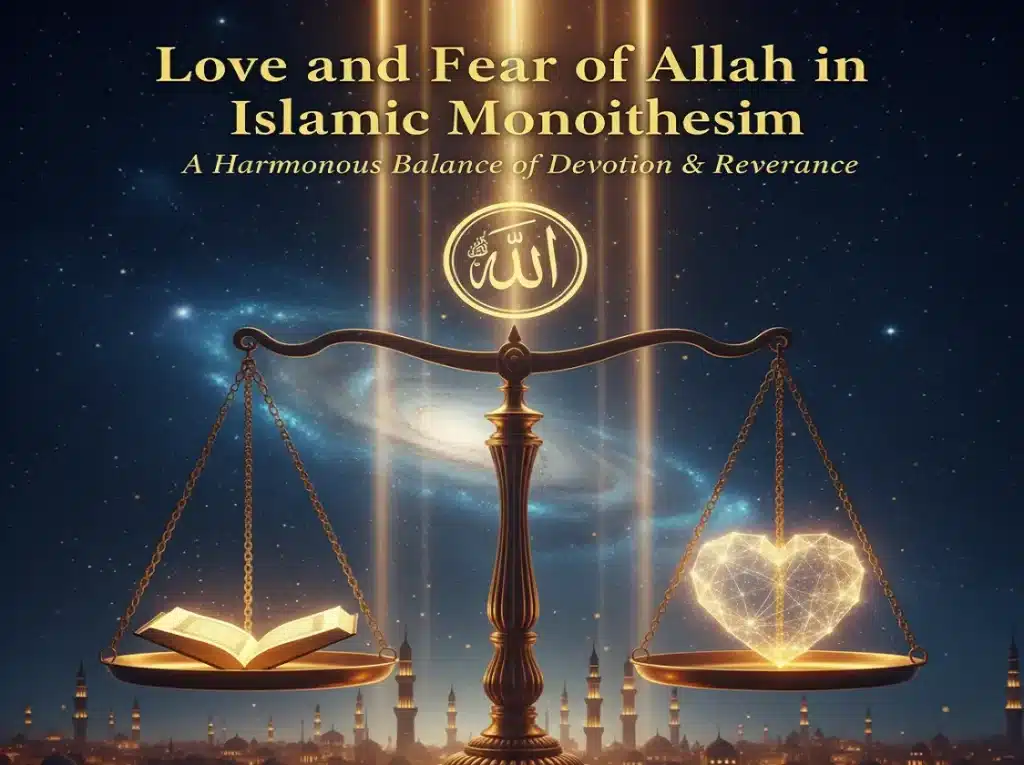
In Islamic monotheism, love and fear of Allah are interconnected. Muslims believe that their fear of Him should balance their love for Allah. They believe their fear of Allah helps them avoid sinning and do good deeds, while their love for Allah motivates them to strive for His pleasure.
The relationship between love and fear of Allah is also emphasized in the Quran. For example, in Surah Al-Baqarah, Allah says: “And of mankind are some who take (for worship) others besides Allah as rivals (to Allah). They love them as they love Allah. But those who believe, love Allah more (than anything else)” (2:165). This verse highlights the importance of loving Allah above all else, including worldly possessions and other people.
Another verse in the Quran highlights the importance of balancing love and fear of Allah. In Surah Al-Anbiya, Allah says: “And whoever should hope for the meeting with Allah – indeed, the term decreed by Allah is coming. And He is the Hearing, the Knowing. And whoever strives only strives for [the benefit of himself. Indeed, Allah is free from need of the worlds” (21-22). This verse emphasizes the importance of striving to please Allah, while also recognizing His power and the consequences of one’s actions.
The Prophet Muhammad (peace be upon him) also emphasized the importance of balancing love and fear of Allah. He said: “Verily, I know the words that will cause Allah to remove a person from the Hellfire and enter him into Paradise. They are: ‘La ilaha illa Allah’ (there is no deity worthy of worship except Allah)” (Sahih Bukhari). This hadith highlights the importance of acknowledging Allah’s oneness and supremacy, an expression of both love and fear of Allah.
Conclusion:
In conclusion, the relationship between love and fear of Allah is essential to Islamic monotheism. Muslims believe their fear of Him should balance their love for Allah, which helps them avoid sinning and do good deeds. Love of Allah involves recognizing His oneness and supremacy and acknowledging His mercy and guidance. Fear of Allah involves recognizing His power and the consequences of one’s actions and striving to avoid sinning and seek forgiveness for one’s sins. By cultivating both love and fear of Allah, Muslims can strengthen their relationship with Him and live a life that is pleasing to Him.
Heavy and Light Letters in Arabic (Tafkhīm and Tarqīq): A Complete Beginner-to-Advanced Guide Introduction: Why Heavy and Light Letters Matter When a...
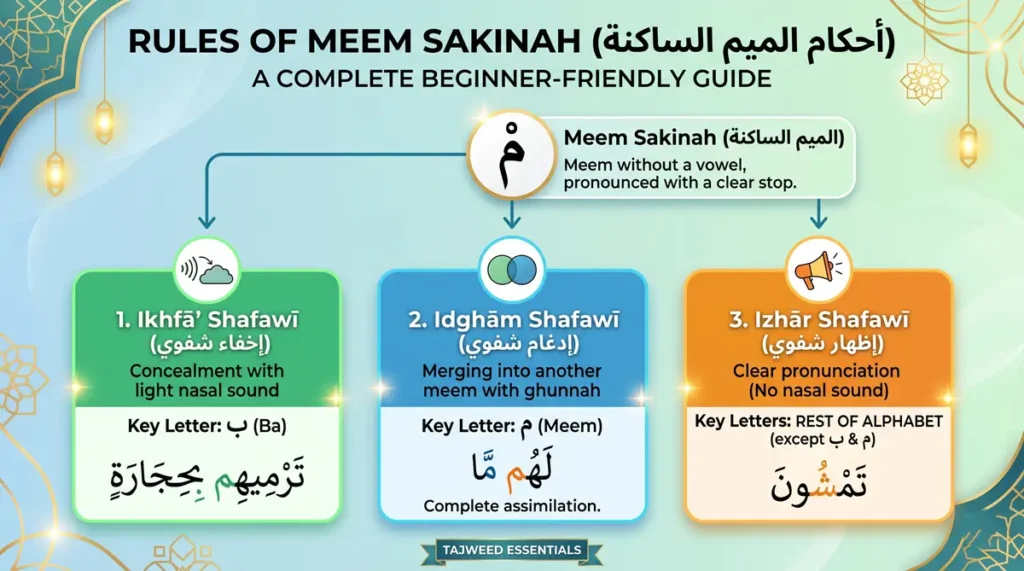
Rules of Meem Sakinah (أحكام الميم الساكنة): A Complete Beginner-Friendly Guide Meem Sakinah (الميم الساكنة) refers to the Arabic letter م (meem) that...