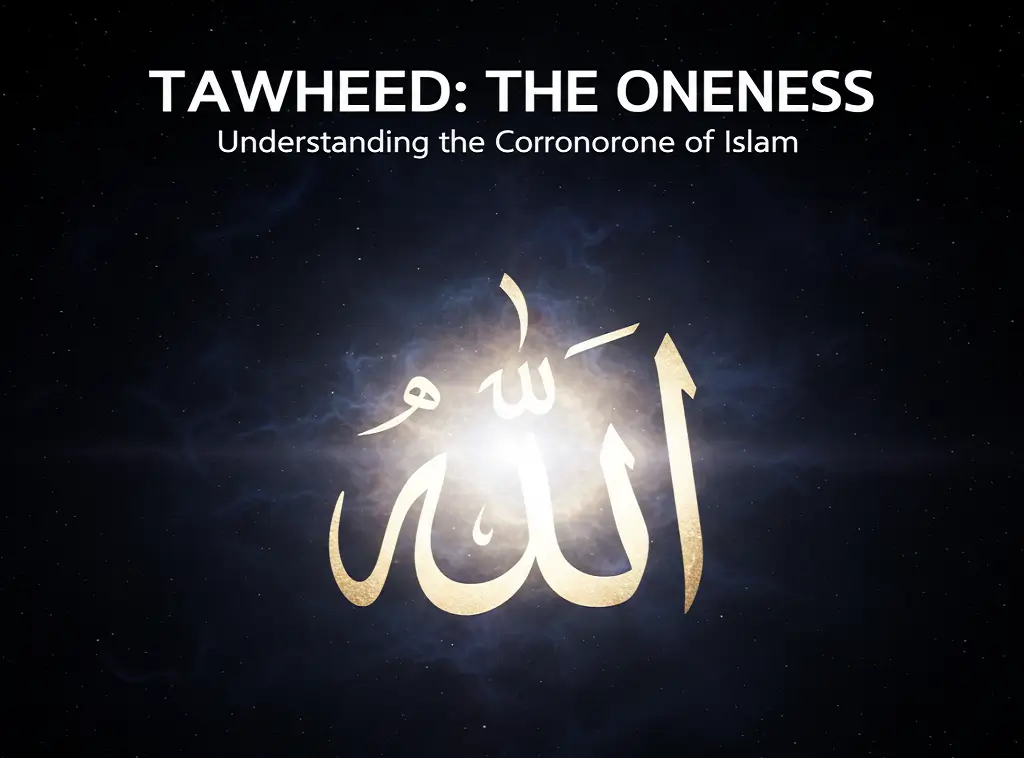
Understanding Tawheed: The Significance of Believing in Allah in Islamic Monotheism
Introduction:
Islam is one of the largest religions in the world, with over 1.9 billion followers worldwide. Islam is a religion that emphasizes the belief in the Oneness of God. At the core of Islamic beliefs lies monotheism, the belief in the Oneness of God. This belief in the Oneness of God, or Tawheed in Arabic, is the cornerstone of the Islamic faith and shapes the daily lives of Muslims worldwide. Understanding the belief in Allah in Islamic monotheism is essential to a deeper understanding of the Islamic faith. In this blog, we will explore the concept of Tawheed and its significance in Islamic monotheism.
Tawheed is the belief in the Oneness of God in Islam. It affirms that only one God, Allah, is the Creator and Sustainer of the universe. Allah is the only deity worthy of worship, and there are no partners or intermediaries between Allah and His creation.
The concept of Tawheed goes beyond a mere theological belief; it is a comprehensive way of life for Muslims. Tawheed impacts all aspects of a Muslim’s life, from their beliefs and practices to their interactions with others. Muslims believe that by affirming the Oneness of Allah and submitting to His will, they can achieve peace and harmony in this life and the hereafter.
The Quran, the holy book of Islam, emphasizes the importance of Tawheed in numerous verses. In Surah Al-Ikhlas, Allah says, “Say, ‘He is Allah, [who is] One, Allah, the Eternal Refuge. He neither begets nor is born, nor is there to Him any equivalent.'” (112:1-4). This verse encapsulates the essence of Tawheed, affirming that Allah is One, Eternal, and Unique, with no partners or equals.
The Significance of Believing in Allah in Islamic Monotheism:
Believing in Allah in Islamic monotheism is significant for several reasons.
1. Understanding the Purpose of Life:
Muslims believe that Allah has created them to worship Him alone and live their lives according to His guidance. By submitting to Allah’s will and following His commands, Muslims can attain closeness to Allah and succeed in this life and the hereafter. The belief in Allah and His guidance provides Muslims with a clear understanding of their purpose in life.
2. Unity and Brotherhood:
Believing in Allah in Islamic monotheism gives Muslims a sense of unity and brotherhood. Muslims worldwide, regardless of their race or nationality, share a common belief in Allah and His Messenger, Prophet Muhammad (peace be upon him). This belief creates a bond of brotherhood that transcends social, economic, and political boundaries, uniting Muslims under the banner of Islam.
The Quran says, “The believers are but brothers, so make peace between your brothers and fear Allah that you may receive mercy.” (49:10). This verse emphasizes the importance of brotherhood among Muslims and encourages them to work towards peace and harmony.
3. A Strong Moral Compass:
Believing in Allah in Islamic monotheism helps Muslims develop a solid moral compass. The Quran and the teachings of Prophet Muhammad (peace be upon him) provide Muslims with clear guidance on how to live their lives in a way that pleases Allah. Muslims are encouraged to be honest, just, compassionate, and kind to others, to avoid harmful behavior, and to strive for excellence in all aspects of their lives.
The Quran says, “Indeed, Allah orders justice and good conduct and giving to relatives and forbids immorality and bad conduct and oppression. He admonishes you that perhaps you will be reminded.” (16:90). This verse highlights the importance of good conduct and justice in Islam.
4. Comfort and Solace in Times of Difficulty:
Believing in Allah in Islamic monotheism provides Muslims with a source of comfort and solace in times of difficulty. Muslims believe Allah is the Most Merciful and is always ready to help His servants. Muslims can find peace and comfort by turning to Allah in times of hardship and adversity.
The Quran says, “And when My servants ask you, [O Muhammad], “concerning Me – indeed I am near. I respond to the invocation of the supplicant when he calls upon Me. So let them respond to Me [by obedience] and believe in Me that they may be [rightly] guided.” (2:186). This verse highlights the importance of turning to Allah in need and seeking His help and guidance.
5. Accountability and Responsibility:
Believing in Allah in Islamic monotheism reminds Muslims of their accountability and responsibility. Muslims believe that Allah is the ultimate judge, and they will be held accountable for their actions in this life. By believing in Allah, Muslims are reminded of their responsibilities towards themselves, their families, their communities, and the wider world. This belief encourages Muslims to strive towards righteousness and to fulfill their obligations towards Allah and His creation.
The Quran says, “So whoever does an atom’s weight of good will see it, and whoever does an atom’s weight of evil will see it.” (99:7-8). This verse highlights the importance of responsibility for one’s actions and striving for goodness.
Conclusion:
Believing in Allah in Islamic monotheism is fundamental to the Islamic faith. It provides Muslims with a clear understanding of their purpose in life, a sense of unity and brotherhood, a solid moral compass, comfort and solace in times of difficulty, and a reminder of their accountability and responsibility. Understanding tawhid and its significance is essential to gaining a deeper understanding of the Islamic faith and its impact on the lives of Muslims.
Heavy and Light Letters in Arabic (Tafkhīm and Tarqīq): A Complete Beginner-to-Advanced Guide Introduction: Why Heavy and Light Letters Matter When a...
Rules of Meem Sakinah (أحكام الميم الساكنة): A Complete Beginner-Friendly Guide Meem Sakinah (الميم الساكنة) refers to the Arabic letter م (meem) that...