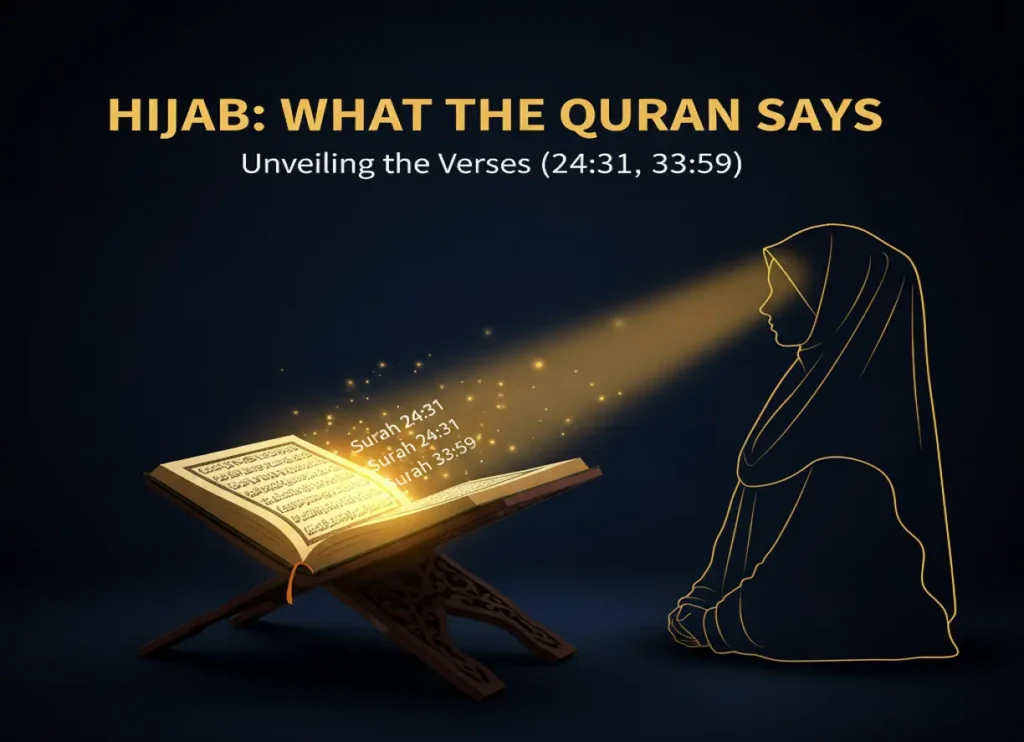
Understanding the Hijab: Unveiling the Quranic Verses on Modesty
Introduction:
In Islam, the concept of hijab holds great significance. Hijab, often misunderstood as merely a piece of cloth, is a symbol of modesty and adherence to religious values for Muslim women. The Quran, the holy book of Islam, contains several verses that emphasize the importance of hijab and guide its observance. In this blog, we will explore the Quranic verses about hijab, shedding light on its significance and its obligations.
Hijab, derived from the Arabic word “hejab,” means to conceal or cover. However, its essence extends beyond physical covering to encompass modesty in behaviour, speech, and attire. The primary purpose of hijab in Islam is to promote purity, safeguard personal dignity, and protect both men and women from immodesty and temptation.
II. Hijab as an Obligation:
Surah An-Nur (24:31): “And tell the believing women to lower their gaze and guard their private parts and not expose their adornment except that which [necessarily] appears thereof and to wrap [a portion of] their headcovers over their chests…”
This verse underscores the obligation of hijab and instructs women to cover their bodies, except for what is apparent, and to drape their headcovers over their chests.
Surah Al-Ahzab (33:59): “O Prophet, tell your wives and your daughters and the women of the believers to bring down over themselves [part] of their outer garments. It is more suitable that they will be known and not abused…”
This verse highlights the responsibility of the Prophet Muhammad (peace be upon him) to convey the commandment of hijab to the women of the believers. It emphasizes the protective nature of hijab, safeguarding women from potential harm or abuse.
III. The Modesty of Dress:
Surah An-Nur (24:30): “Tell the believing men to reduce [some] of their vision and guard their private parts. That is purer for them. Indeed, Allah is acquainted with what they do.”
While this verse addresses men, it indirectly highlights the importance of modesty for both genders. It reminds men to lower their gaze, acknowledging their responsibility in upholding modesty and respect towards women.
IV. The Social and Spiritual Benefits of Hijab:
Surah Al-Ahzab (33:53): “And when you ask [his wives] for something, ask them from behind a partition. That is purer for your hearts and their hearts.”
This verse speaks to the need for modest interaction between men and women. Hijab acts as a barrier, fostering a sense of respect, purity, and protection within society.
Surah Al-Ahzab (33:35): “Indeed, the Muslim men and Muslim women, the believing men and believing women, the obedient men and obedient women, the truthful men and truthful women, the patient men and patient women, the humble men and humble women, the charitable men and charitable women, the fasting men and fasting women, and the men who guard their private parts and the women who do so – for them, Allah has prepared forgiveness and a great reward.”
This verse emphasizes that both men and women are accountable for their actions and that Allah will reward their commitment to modesty and observing the obligations of hijab. It highlights the equal spiritual status and responsibilities of men and women in Islam.
This verse emphasizes the correlation between faith, righteousness, and the modesty of dress. It encourages Muslim women to dress modestly as a reflection of their faith and devotion to Allah.
Conclusion:
Hijab, as described in the Quran, is not merely a cultural practice but an integral part of Islamic teachings. It serves as a symbol of modesty, piety, and protection for Muslim women. The Quranic verses on hijab emphasize the importance of dressing modestly, covering one’s body, and conducting oneself with dignity. By adhering to hijab, Muslim women display their devotion to Allah and contribute to preserving social harmony and respect between genders.
It is crucial to approach the hijab with understanding and respect, acknowledging the diversity of interpretations and personal choices within the Muslim community. Hijab should be viewed as a personal and spiritual journey guided by the principles outlined in the Quran.
In a world where modesty and respect are often undervalued, the Quranic verses on hijab offer a powerful reminder of the significance of preserving one’s dignity and upholding the values of Islam. By embracing hijab, Muslim women assert their identity, maintain their self-respect, and contribute to the promotion of a virtuous and harmonious society.
In conclusion, the Quranic verses about hijab emphasize its obligatory nature and its numerous benefits to individuals and society. Understanding the true essence of hijab as depicted in the Quran allows for a deeper appreciation of its significance and the virtues it represents. As Muslims strive to embody the principles of modesty and adherence to religious values, the hijab serves as a tangible expression of their commitment to Allah and their faith in.
Heavy and Light Letters in Arabic (Tafkhīm and Tarqīq): A Complete Beginner-to-Advanced Guide Introduction: Why Heavy and Light Letters Matter When a...
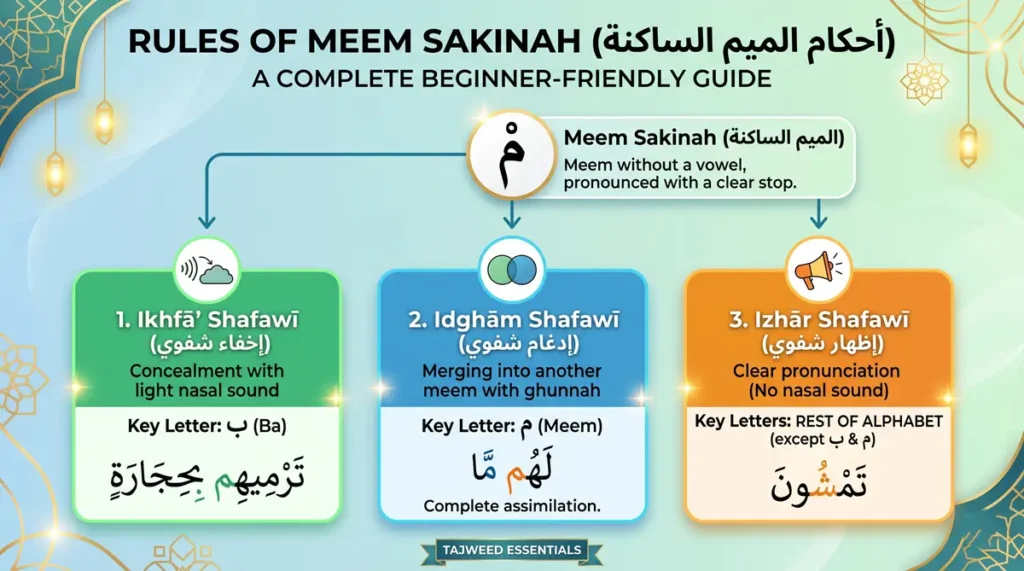
Rules of Meem Sakinah (أحكام الميم الساكنة): A Complete Beginner-Friendly Guide Meem Sakinah (الميم الساكنة) refers to the Arabic letter م (meem) that...