If you have any questions
Don’t hesitate to reach out to us via live chat or email!
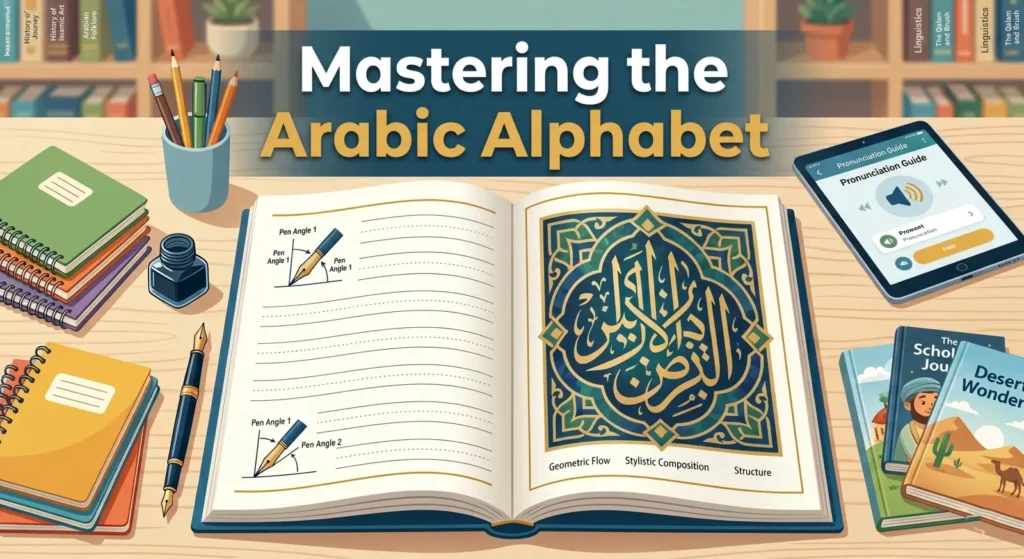
Assalamu alaikum wa rahmatullahi wa barakatuh, dear brothers and sisters in Islam.This the second episode of continuing our series on simplifying Tajweed rules. If you caught the first article, we explored the big picture: why Tajweed matters, the rewards of proper recitation, and how to get started without feeling overwhelmed. Now, as promised, we’re diving into the foundations. Before we tackle advanced Tajweed like makharij or idgham, we need a solid grasp of the Arabic letters themselves. That’s where methods like Noorani Qaida and Nour al Bayan come in.
Living in places like London or anywhere in the West, where Arabic might not surround us daily, starting with the alphabet can feel like learning a new language, because it is! But these two popular curricula make it straightforward and rewarding. In this article , we’ll break down their histories, teaching methods, key differences, benefits, why they’re so famous worldwide, some great alternatives, why Islamic institutes depend on them, and most importantly, how they can transform your Tajweed practice as a Western Muslim. Whether you’re a parent teaching your kids, a revert building from scratch, or someone brushing up after years away from the mushaf, this is for you. Let’s make learning the Quran’s letters as enjoyable as it is essential. Remember, the Prophet (peace be upon him) said, “The best of you are those who learn the Quran and teach it” (Sahih al-Bukhari). Your effort here is ibadah.
In This Article
ToggleLearning the Arabic alphabet and basic reading skills to recite the Quran is relatively easy and completely achievable without learning the full Arabic language. This is one of the most beautiful aspects of how Allah has made the Quran accessible to every Muslim around the world, regardless of their mother tongue.
Many millions of non-Arab Muslims — from Indonesia to Senegal, from America to Europe — recite the Quran beautifully in Arabic every single day, even though they don’t speak or understand conversational Arabic at all. They simply learned the script and the rules of tajweed (proper pronunciation) to a level sufficient for correct recitation. This shows that the barrier is not as high as many people imagine.
The full Arabic language includes:
But Quranic reading only requires far less:
You don’t need to know what any word means, conjugate verbs, or build sentences. You’re basically learning a new phonetic script — like learning to read Cyrillic or Devanagari script without speaking Russian or Hindi fluently.
With consistent daily practice (30–60 minutes), most adults and older children can reach a basic reading level for 12 weeks:
Many reverts and non-Arab Muslims report being able to read Al-Fatihah and a few short surahs confidently within 1–2 months. With a good teacher, it’s even faster.
Let’s start with Noorani Qaida, often the first name that pops up when searching for “how to learn Arabic letters for Quran.” Also known as Al-Qaida An-Nuraniyah or simply Nurani Qaida, this is a compact booklet designed specifically for beginners to master the Arabic alphabet and basic pronunciation. Think of it as the “ABC book” of Quranic Arabic simple, progressive, and focused on getting you reading actual verses quickly.
Noorani Qaida traces its roots to the Indian subcontinent, where Islamic education has long emphasized accessible tools for non-Arabic speakers. It was compiled by Sheikh Noor Muhammad Haqqani, an eminent Islamic scholar from Ludhiana (hence sometimes called Maulvi Noor Muhammad Ludhianvi). Born in the late 19th or early 20th century, Sheikh Haqqani was passionate about simplifying Quran learning for the masses, especially in regions like India and Pakistan where Urdu-speaking Muslims needed a bridge to Arabic. He drew from traditional teaching methods but organized them into a structured, rhyming format that’s easy to memorize and teach.
First published around the mid-20th century, the book gained traction post-partition in South Asia’s madrasas. Its name “Nuraniyah” (meaning “light-filled” or “illuminated”) reflects its goal: to illuminate the path to the Quran’s light. Over decades, it spread globally through migration and online resources, becoming a staple in Islamic circles. Today, it’s taught in mosques from Lahore to London, and even digitized in apps like Quran Companion. Sheikh Haqqani’s legacy? Making Quran accessible without needing full Arabic fluency upfront.
I recall a story from a friend in Manchester: His grandfather, a migrant from Pakistan in the 1960s, used a tattered Noorani Qaida to teach the neighborhood kids after work. That simple book turned generations of British Muslims into confident reciters. It’s a reminder of how grassroots efforts preserve our deen.
Noorani Qaida’s method is brilliantly straightforward, divided into 17 lessons that build like blocks. It starts with isolated Arabic letters (huruf mufradat), teaching their shapes in different positions: beginning, middle, end. Then come the short vowels (harakat: fatha, kasra, damma) and sukun (silent letters). You’ll practice sounding them out.
What sets it apart is the emphasis on joining letters (huruf muttasilah). Early on, you form simple words, mimicking Quranic structure. For example, lesson 3 might have you blending “alif-ba” into “ab.” By mid-book, you’re tackling tanween (double vowels) and basic Tajweed like noon saakin rules. The lessons use colorful charts, repetition, and Quranic examples—ending with short surahs like Al-Ikhlas.
The pace is moderate to fast: Beginners can finish in 3-6 months with daily practice. Teachers often use chanting or group repetition, making it interactive. No fancy tech needed—just a book, a teacher (or app), and consistency. It’s phonetic-focused, helping non-natives avoid common pitfalls like confusing “tha” with “sa.”
The perks are endless. First, it builds confidence: You go from staring at squiggles to reading ayahs in weeks. For Tajweed, it introduces rules early, like proper makharij (articulation points)—ensuring your “qaf” comes from the back of the throat, not the front like English “k.”
It’s kid-friendly, with visuals and short exercises that keep little ones engaged. Adults love it for self-study; many Western Muslims use free PDFs or YouTube tutorials. Benefits include improved memorization (hifz), as correct pronunciation sticks better. Spiritually, it connects you directly to the Quran,Allah says, “Recite in the name of your Lord who created” (96:1). Noorani Qaida makes that recitation accurate and beautiful.
In the West, where time is tight, its brevity shines: 30 minutes daily yields results. Plus, it’s free or cheap,unlike pricey courses.
Now, onto Nour al Bayan (often spelled Noor Al Bayan), another powerhouse for Arabic letters. This method is like Noorani Qaida’s thoughtful cousin: slower, more detailed, and geared toward deep understanding. It’s a book and curriculum that teaches not just reading but the Arabic language’s rules, making it ideal for those wanting to go beyond recitation to comprehension.
Nour al Bayan was developed by Sheikh Tariq Al-Saeed (also Tarek Al-Saied or Taariq Assa’eid), an Egyptian scholar renowned for his work in Arabic and Quranic education. Born in Egypt, Sheikh Al-Saeed drew from his experience teaching non-Arab students, noticing gaps in traditional methods. He created Nour al Bayan in the late 20th century, publishing it around the 1990s or early 2000s. Sadly, he passed away recently, but his legacy lives through millions who’ve studied his book.
Originating in Egypt, where Arabic is native but Quranic teaching is refined, the method spread via Al-Azhar influences and online platforms. “Nour al Bayan” means “Light of Clarification,” symbolizing its aim to clarify Arabic’s complexities. It’s popular in the Arab world and diaspora, often used in tandem with Tajweed courses. Unlike Noorani’s South Asian roots, this has a Middle Eastern flavor, incorporating more linguistic depth.
Nour al Bayan takes a phonetic, step-by-step approach, starting with makharij—precise articulation from day one. Lessons cover letters’ sounds, then vowels, and gradually words. It includes exercises on grammar rules like tanween and shadda, with a slower pace for mastery.
Unique features: More emphasis on listening and repeating, often with audio aids. It integrates Tajweed deeply, like rules for elongation (madd). The book has colorful illustrations, making it visual. Pace is deliberate beginners might take 3-6 months, but the retention is higher. Methods include teacher-led drills, homework on forming sentences, and Quranic application.
It’s holistic: While Noorani focuses on reading, Nour al Bayan teaches language rules, helping you understand meanings alongside pronunciation.
Benefits mirror Noorani but with extras. It fosters deeper Tajweed from the start, reducing future corrections. For language lovers, it builds Arabic skills useful for tafsir or daily dua. Kids benefit from the engaging format; adults appreciate the structure for self-paced learning.
Spiritually, it aligns with the Sunnah: The Prophet (peace be upon him) recited clearly, as companions described. In the West, its modern vibe appeals to tech-savvy learnersm many apps feature it. Overall, it creates well-rounded reciters who not only read but grasp the Quran’s beauty.
So, what’s the real scoop on differences? Let’s compare side-by-side for clarity.
Neither is “better” choose based on needs. A Western mom shared: She used Noorani for speed with her toddlers, then Nour al Bayan for depth with older kids.
Their fame boils down to effectiveness and accessibility. Noorani’s simplicity made it a madrasa staple in South Asia, spreading via diaspora. Nour al Bayan’s innovation appealed to Arab educators, going viral online. Both are endorsed by scholars, Al-Azhar uses similar methods.
Fame factors: Proven results (millions fluent), affordability, adaptability to online teaching. In a global ummah, they’re bridges for non-Arabs. Hadith reminds us: Effort in learning Quran doubles rewards (Sahih Muslim).
Not one-size-fits-all? Try these:
Each has strengths., Fath-Ar-Rahman for speed. Institutes mix them based on students.
Institutes like online academes and local masjids rely on them for systematic progression. They ensure consistency, teachers follow clear lessons, reducing errors. Benefits: High success rates, Tajweed integration, scalability for groups or online.
For Western institutes, flexibility matters, short courses fit schedules. They build community: Group classes foster bonds.
In the West, where Arabic exposure is limited, these methods are lifesavers. Non-natives start from zero, but online versions (free PDFs, YouTube) make learning home-based. For families: Parents teach kids without travel. Reverts: Builds confidence for mosque participation.
Practically: Tajweed focus prevents “Western accents” in Quran. Spiritually: Direct Quran access brings peace amid stress. As Allah says, “We have certainly made the Quran easy for remembrance” (54:17). These tools prove it.
When choosing between the Norania method (Al-Qaida An-Norania) and the Nor Al-Bayan method (Noor Al-Bayan), many parents and Quran teachers ask: Which method is better for teaching children to read the Quran? Is one better for certain ages? Is there a difference based on nationality? Where is each method most popular? This is a guide explains the key differences between choosing Norania vs Nor Al-Bayan, their advantages, ideal age groups, and global popularity.
The Norania method is a step-by-step phonetic system designed to teach beginners how to read Arabic letters correctly before moving to Quranic verses.
🔹 Key Features of the Norania Method:
🔹 Strengths of Norania:
The Nor Al-Bayan method is a structured Quran reading system that integrates Tajweed rules earlier in the learning process.
🔹 Key Features of Nor Al-Bayan:
🔹 Strengths of Nor Al-Bayan:
Best for Ages 4–7
Recommended: Norania Method
Why?
Best for Ages 8–12
Depends on student level:
Best for Teenagers and Adults
Recommended: Nor Al-Bayan
Why?
Nationality itself does not determine success — but language background does.
🔹 Norania Is Most Popular In:
Most of the western country.
Why?
Nor Al-Bayan Is More Common In:
Other Middle east and Arabic-speaking countries
Why?
Faster transition to Quran memorization
Norania may be better if:
Nor Al-Bayan may be better if:
Student plans to memorize Quran soon
Choose Norania if:
Choose Nor Al-Bayan if:
Feature | Norania | Nor Al-Bayan |
Teaching Speed | Slower, gradual | Faster |
Tajweed Integration | Later | Earlier |
Best for Young Kids | ✅ Yes | ⚠️ Sometimes |
Best for Adults | ⚠️ Sometimes | ✅ Yes |
Best for Non-Arabs | ✅ Very suitable | Good if basics known |
Popular In | South Asia, Africa | Arab world |
Choose Norania if your priority is:
Choose Nor Al-Bayan if your priority is:
Both the Norania method and the Nor Al-Bayan method are effective Quran learning systems. There is no universally “best” method — only what is best for your specific student. Norania excels in building strong phonetic foundations, especially for young children and non-Arabic speakers. Nor Al-Bayan is excellent for older learners and environments where Tajweed integration and faster fluency are prioritized.
The right choice depends on:
By understanding these differences, you can confidently choose the best Quran reading method for your students and ensure a successful learning journey.
If you have any questions
Don’t hesitate to reach out to us via live chat or email!