Learning Quran for Children: The Best Age and Why It Matters?
Introduction:
Learning the Quran is an essential aspect of Islamic education for children. It helps them develop a strong spiritual foundation, build moral values, and become responsible and righteous individuals. But what is the best age for children to start learning the Quran? This article will explore the importance of learning the Quran for children, the best age to start, and how parents can help their children in this journey.
Learning the Quran is one of the fundamental practices in Islam, and every Muslim must understand and implement its teachings in their daily lives. For children, the Quran provides a strong foundation in Islamic values and morals, which they can carry with them for the rest of their lives. Learning the Quran helps children develop a sense of purpose, meaning, and spirituality. It also instills discipline, patience, and perseverance in them, which are essential qualities for success in all aspects of life.
Age of Learning Quran:
The age at which children start learning the Quran varies depending on the child’s development and readiness. However, it is generally recommended to start teaching children the Quran as early as possible. Ideally, children can start learning the Quran as soon as they begin to speak and understand the meaning of words. This is because young children are naturally inclined to learn and absorb information quickly, making it easier for them to memorize and recite Quranic verses.
Best Age for Learning Quran for Children:
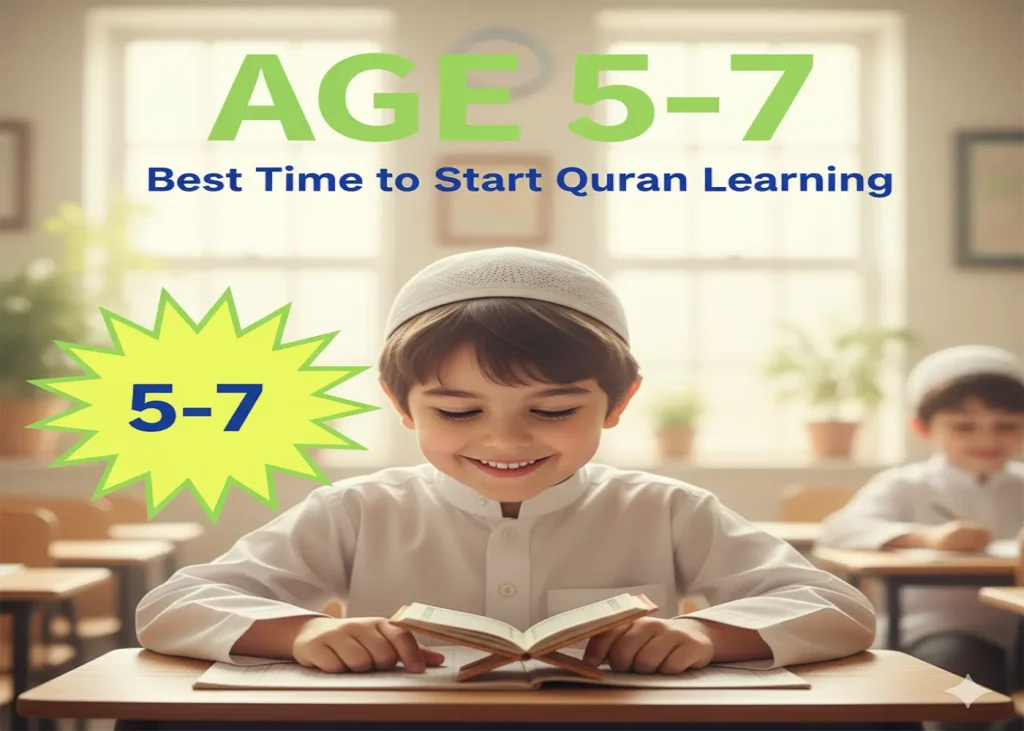
The best age for children to learn the Quran is between 5 and 7. At this age, children have developed their cognitive abilities, can focus for more extended periods, and have a better understanding of the world around them. They are also more receptive to learning and can easily memorise Quranic verses. Moreover, starting at this age allows children to develop a lifelong love for the Quran and the Islamic faith.
Steps to Help Children Learn Quran:
Set a positive and encouraging learning environment: Create a positive atmosphere encouraging children to learn the Quran. Make learning fun and exciting by using games, stories, and other interactive methods.
Start with the basics: Begin by teaching children the basics of the Arabic alphabet, pronunciation, and the meaning of simple Quranic words and phrases. Gradually progress to longer verses and chapters.
Consistency is vital: Consistency is essential in learning the Quran. Set a regular schedule for Quranic study and stick to it. This will help children develop a routine and make learning the Quran a part of their daily lives.
Use repetition and memorization techniques: Repetition is an effective method for memorizing Quranic verses. Encourage children to repeat verses out loud and memorize them through regular practice and recitation.
Seek guidance and support: Seek guidance and support from knowledgeable individuals such as teachers, scholars, and other parents. They can provide valuable advice and resources to help children learn the Quran effectively.
Examples from Quran:
The Quran is filled with stories and lessons that are relevant to children’s lives. Here are a few examples:
The Story of Prophet Yusuf (Joseph): The story of Prophet Yusuf is a powerful example of patience, perseverance, and trust in Allah. It teaches children the importance of staying true to their faith and remaining steadfast in adversity.
The Story of Prophet Ibrahim (Abraham): The story of Prophet Ibrahim teaches children about the importance of obedience to Allah and the rewards of following His commands. It also teaches them the importance of compassion, kindness, and generosity towards others.
The Story of Prophet Musa (Moses): The story of Prophet Musa teaches children about the importance of courage and determination in standing up for justice and fighting against oppression. It also emphasizes the value of humility and gratitude towards Allah.
Conclusion:
In conclusion, learning the Quran is a vital aspect of Islamic education for children. Starting at an early age and providing a positive and encouraging learning environment can help children develop a love for the Quran and the Islamic faith. The best age to start learning the Quran for children is between 5 to 7 years old, as they have developed their cognitive abilities and can easily memorise Quranic verses. Parents can help their children in this journey by setting a regular schedule, using repetition and memorization techniques, and seeking guidance and support. The Quran provides many relevant examples and stories to children’s lives and teaches them valuable lessons about morality, faith, and character. By helping children learn the Quran, parents can lay the foundation for their children’s spiritual growth and development.
Heavy and Light Letters in Arabic (Tafkhīm and Tarqīq): A Complete Beginner-to-Advanced Guide Introduction: Why Heavy and Light Letters Matter When a...
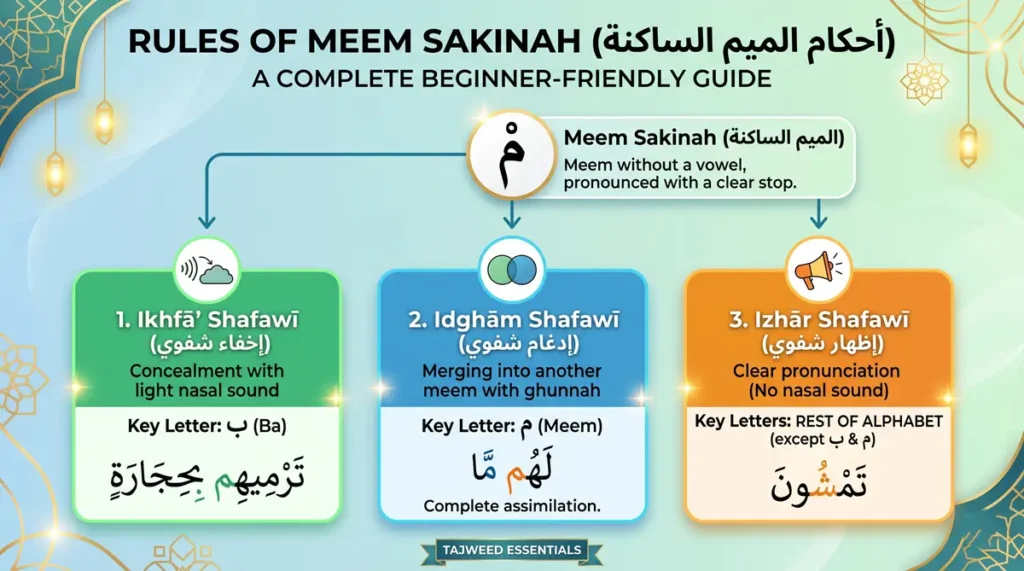
Rules of Meem Sakinah (أحكام الميم الساكنة): A Complete Beginner-Friendly Guide Meem Sakinah (الميم الساكنة) refers to the Arabic letter م (meem) that...