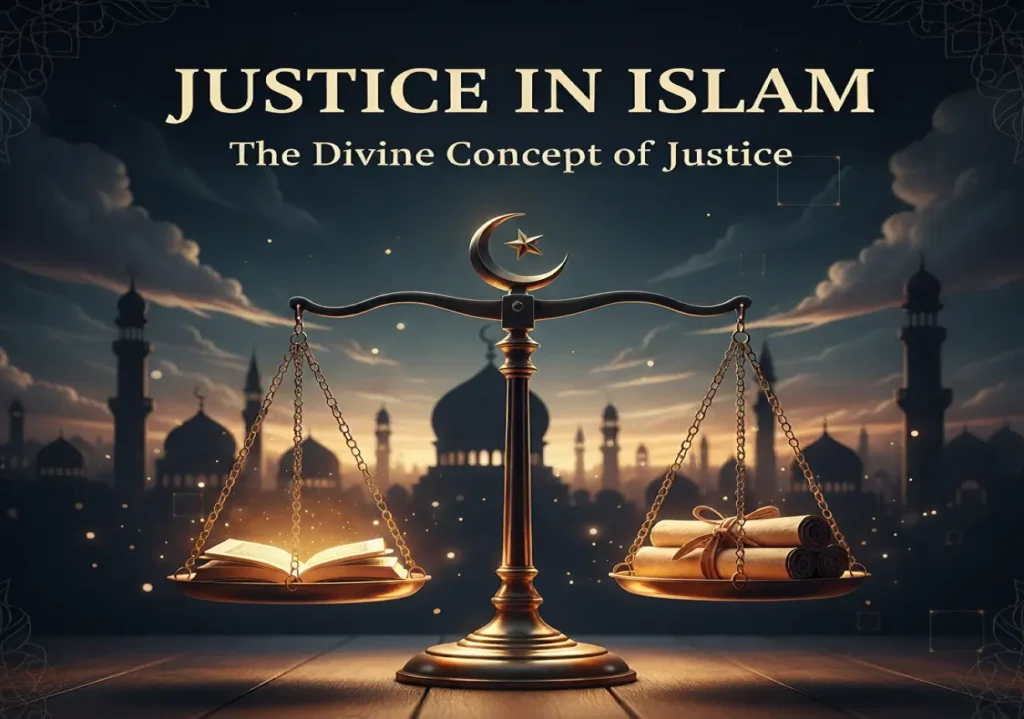
Justice in Islam: Upholding Divine Principles for a Harmonious Society
Justice is a fundamental concept deeply ingrained within the teachings of Islam. It is a cornerstone of the religion, guiding the actions and decisions of Muslims. Islamic justice encompasses principles that emphasize fairness, equality, and the protection of human rights. This article explores the concept of justice in Islam, drawing evidence from the Quran and Sunnah (the teachings and practices of Prophet Muhammad, peace be upon him), to shed light on its significance and application.
Islam perceives justice as an attribute of Allah, the Most High. The Quran states, “Indeed, Allah orders justice” (Quran 16:90). It highlights that justice is an integral part of the divine nature, affirming the importance of establishing justice on earth. Islamic justice goes beyond mere legal frameworks; it encompasses social, economic, and moral spheres, aiming to create a harmonious society based on equity.
1.2: The Quest for Islamic Justice
In Islamic teachings, justice is a universal principle that applies to individuals, communities, and governance. Muslims are encouraged to seek justice and act justly in all aspects of life. Prophet Muhammad, peace be upon him, emphasized the significance of justice, stating, “The most beloved of people to Allah are those who are most beneficial to people” .
2: Elements of Justice in Islam
2.1: Equality before the Law
Islamic justice advocates for equality before the law, irrespective of a person’s race, religion, or social status. The Quran states, “O you who have believed, be persistently standing firm for Allah, witnesses in justice, and do not let the hatred of a people prevent you from being just. Be just; that is nearer to righteousness” (Quran 5:8). This verse highlights the importance of impartiality and fairness in the pursuit of justice.
2.2: Social and Economic Justice
Islam places great emphasis on addressing social and economic inequalities. Zakat, one of the five pillars of Islam, obligates Muslims to give a portion of their wealth to support the less fortunate. This form of obligatory charity aims to bridge the gap between the rich and the poor, fostering social justice within the Muslim community. The Quran states, “And in their wealth is a recognized right for the needy and the deprived” (Quran 70:24-25).
3: Justice in the Islamic Legal System
3.1: Fairness in Legal Proceedings
The Islamic legal system, known as Sharia, strives for fairness and justice in its proceedings. The Quran emphasizes the importance of establishing evidence and testimony before passing judgment. It states, “O you who have believed, be persistently standing firm in justice, witnesses for Allah, even if it be against yourselves or parents and relatives” (Quran 4:135). This verse highlights the significance of upholding justice even when it may be personally challenging.
3.2: Restorative Justice
Islamic justice promotes restorative justice, aiming to restore harmony and reconciliation within society. It encourages forgiveness and reconciliation rather than seeking retribution. The Prophet Muhammad, peace be upon him, said, “Whoever forgives and makes reconciliation, his reward is due from Allah” (Sunan Ibn Majah). This approach emphasizes mercy and compassion as essential components of Islamic justice.
4: Justice and Gender Equity in Islam
4.1: Equality of Men and Women
Islam upholds the principle of gender equity and justice, recognizing both men and women’s inherent worth and rights. The Quran states, “Whoever does righteousness, whether male or female, while he is a believer – We will surely cause him to live a good life” (Quran 16:97). This verse highlights that both genders are equally valued in the sight of Allah, emphasizing the importance of justice and fair treatment for all.
4.2: Women's Rights in Islamic Jurisprudence
Islamic jurisprudence acknowledges and safeguards the rights of women. The teachings of Prophet Muhammad, peace be upon him, advocate for women’s fair treatment and respect. He stated, “The best of you are those who are best to their wives” (Sunan Ibn Majah), emphasizing the importance of justice, kindness, and equity within marital relationships. Islamic principles promote gender justice by addressing inheritance, marriage, and divorce issues.
5: Justice and Compassion in Islamic Ethics
5.1: Mercy and Compassion in Islamic Justice
Islam strongly emphasises mercy and compassion as integral aspects of justice. The Quran describes Prophet Muhammad, peace be upon him, as a mercy to all creation, emphasizing the importance of showing compassion in dealings with others. Islamic justice seeks to balance the enforcement of laws with empathy and understanding, aiming for the betterment and reform of individuals rather than solely punitive measures.
5.2: Reparation and Rehabilitation
Islamic justice promotes the concepts of reparation and rehabilitation, seeking to restore individuals to a righteous path. It encourages providing opportunities for reform, education, and support to help individuals reintegrate into society. The Quran emphasizes the importance of enabling positive change, stating, “Indeed, Allah loves those who act justly” (Quran 60:8).
Conclusion:
Justice in Islam encompasses many principles and values, including equality, social and economic justice, fairness in legal proceedings, gender equity, and compassion. These principles are rooted in the teachings of the Quran and the Sunnah of Prophet Muhammad, peace be upon him and serve as a guide for Muslims in their personal and societal interactions. By upholding justice in all spheres of life, Muslims strive to create a harmonious and equitable society that reflects the divine attributes of Allah, the Most Just.
Heavy and Light Letters in Arabic (Tafkhīm and Tarqīq): A Complete Beginner-to-Advanced Guide Introduction: Why Heavy and Light Letters Matter When a...
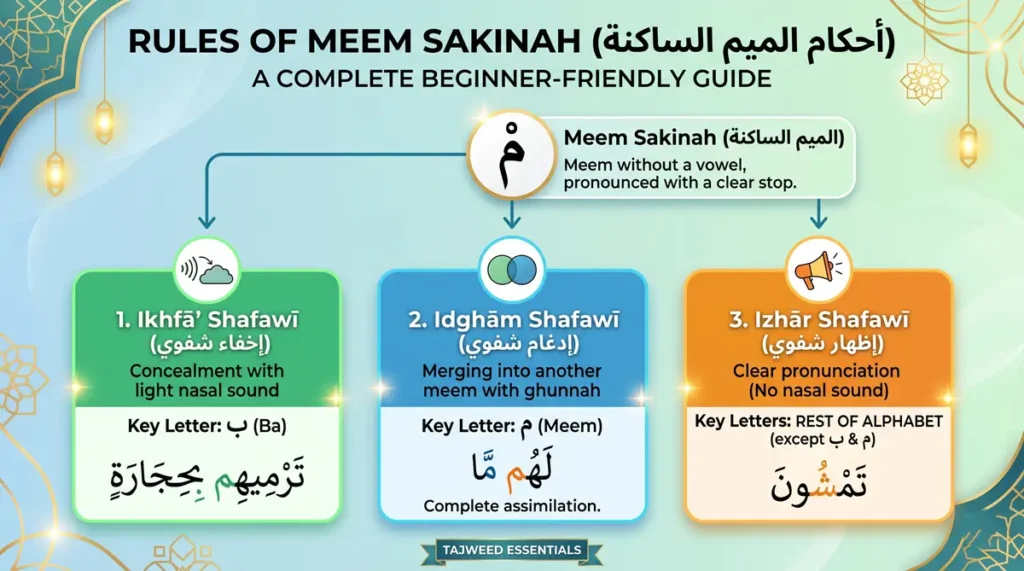
Rules of Meem Sakinah (أحكام الميم الساكنة): A Complete Beginner-Friendly Guide Meem Sakinah (الميم الساكنة) refers to the Arabic letter م (meem) that...