Ayat Academy

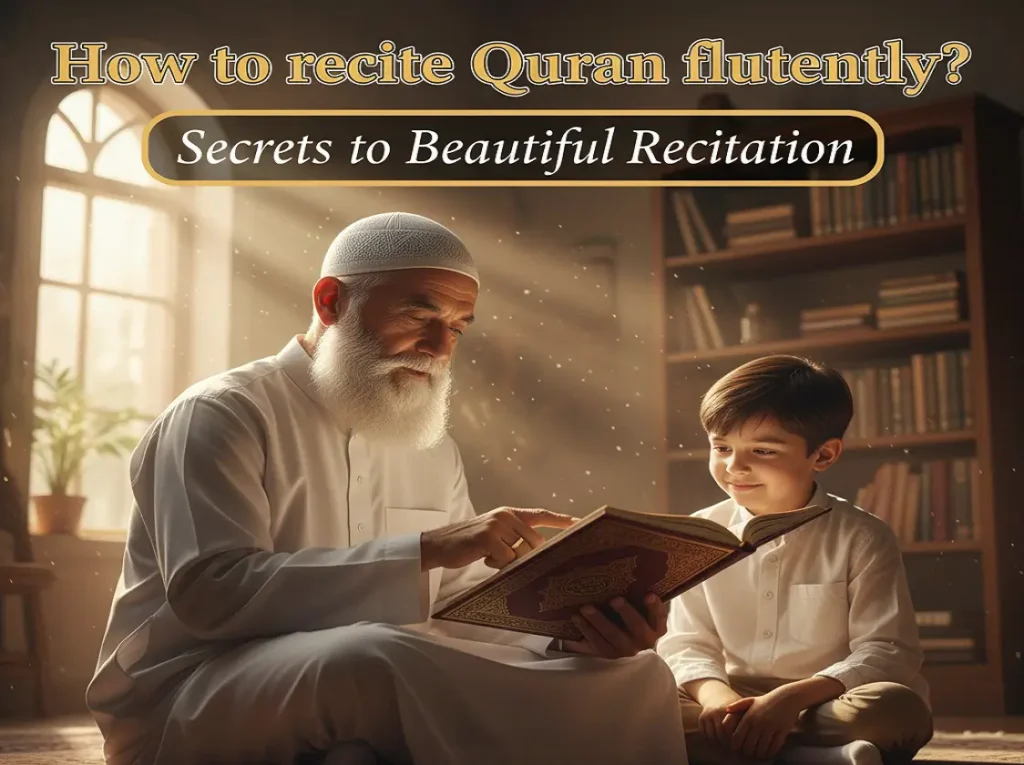
How to recite Quran fluently?

How to recite Quran fluently

The cornerstone of every Muslim’s faith and way of life is the Holy Quran, which was revealed to Prophet Muhammad (PBUH). Allah SWT has clarified in His Book how He wants us to live our lives. Therefore, it is the most important book a Muslim will ever read or recite. Due to the global memorization of the message of Allah SWT by millions of people, it has been passed down to many generations of Muslims. But reading or comprehending the Quran is not the same as reciting it perfectly.

We’ll walk you through several strategies and pointers you can use to master reciting the Qur’an. But first, let’s discuss why it’s important to recite the Quran correctly before learning some of the different techniques for doing so.

Steps towards reciting Quran fluently

1- Study the tajweed rules. The Arabic word “tajweed” means “proficiency” or “doing something well.” It’s also referred to as elocution. To correctly recite the Qur’an, it teaches you how to pronounce specific words. The Qur’an must be recited precisely as it is written, and it is much better if you follow all of the Tajweed rules. Each letter must be pronounced from a specific part of the mouth. Allah said in the Qur’an: “Or add to it, and recite the Qur’an with measured recitation”, which denotes reading the Qur’an with Tajweed or care.

2- Each rule should be followed individually. Tajweed has a large number of rules, making memorization difficult. Fortunately, some Qur’ans have color-coding to make it easier to recognize some Tajweed rules. To learn Tajweed, you should take your time; first, learn a specific rule, then practice applying it.

3- Pay close attention to the words you are saying. Have a translation copy on hand if at all possible so that you can comprehend the meaning of the Qur’an. Make sure the location where you are reading the Qur’an is quiet, clean, and distraction-free.

4- Be fearless of errors. It can be very challenging for some non-native Arabic speakers to get some letters and words’ sounds just right. Tajweed is a difficult skill to master, but you can succeed with persistence and hard work. The Prophet (peace be upon him) narrated this, saying: “The one who is proficient in the recitation of the Qur’an will be with the honorable and obedient scribes (angels), and he who recites the Qur’an and finds it difficult to recite, doing his best to recite it in the best way possible, will have a double reward.”

5- begin with simple chapters. Start with short chapters, such as Chapter 114 (An-Nas), so as not to overtax yourself. Start with short chapters, focus, adhere to the guidelines, and recite slowly. Follow along with and learn from a Qari’s (reciter) recitation by listening to an audio recording of them reading it.

6- Take a break. You should set aside about 30 minutes each day to read the Qur’an. You can never recite the Qur’an fluently if you don’t put in the effort. So please take full advantage of the opportunity to read it when you do have it. Do not rush, and keep distractions to a minimum.

7- Listen to renowned readers. They are people who have devoted their entire lives to the study of Tajweed and have studied under the most esteemed scholars. You will improve at reciting the Quran as you listen to them and emulate them more. Pay attention to people like Saad El Ghamidi, Abdul Rahman Al Sudais, Mishary Rashid Al-afasy, and Abdul Basit Abdus Samad. Their Tajweed and the rhythmic Qur’anic recitation lend their voices a distinctive quality.

8- Find out what it means. When reading the Qur’an, read it with all of your heart and soul and humility. To better understand what is being said, try learning a few Arabic words used throughout the Qur’an.

The value of beautiful Quran recitation

As Allah SWT’s revelation, the Quran is already a beautiful book. And part of the Sunnah is learning to recite the Quran beautifully and get better at it. Several hadiths, including the ones below, emphasize the value of reciting the Quran in a melodic voice.

  • Al-Bara b. Azib narrated that he heard Allah’s Messenger (PBUH) saying, “Beautify the Quran with your voices, for the beautiful voice increases the beauty of the Quran.” (Mishkat Al-Masabi)
  • On another occasion, Abu Hurairah said, “The Messenger of Allah (PBUH) entered the mosque and heard a man reciting Quran. He asked: ‘Who is this?’ It was said: ‘(He is) ‘Abdullah bin Qais.’ He said: ‘He has been given (sweet melodious voice) from the Mazamir of the family of Dawud.” (Sunan Ibn Majah)

Rewards of reciting the Qur'an fluently

1- Outstanding honors, benefits, ranks, and virtues

For those who read the Qur’an, reciting it every day has a great benefit. It is extremely rewarding to recite even one letter of the Qur’an. yes! You read that right: if you read even one letter you will be rewarded.

2- The key to paradise is Quran recitation

Prophet (PBUH) said:

“Whoever reads Ayat Kursi at the end of each mandatory prayer, nothing prevents him from entering Paradise except death.”

“Whoever reads – “Say: Allah is One” (surah Al Ikhlas) – 3 times, will have the reward of reciting the whole Quran.”

3- Mercy and healing for the believers

There is no disease or ailment that the Qur’an cannot heal, whether it be physical, mental, or spiritual. You can find relief from known and unknowable irritants by reciting the Quran. It strengthens our faith and illuminates the heart with the light of faith. Consequently, in order to receive God’s mercy and healing, it is essential to read and recite the Qur’an.

Allah said:

“And We send down from the Qur’an that which is healing and mercy for the believers, and it does not increase the wrongdoers except in loss.”

It was said by A’isha RAA that the Prophet of Allah (PBUH) would read “Mu’awwazat” (Surah Al Falaq and An Nas) and blow himself over if he ever got sick. She would recite over him and wipe him with my hands as his illness grew worse in the hopes of receiving their blessings.

Latest Articles

Heavy and Light Letters in Arabic (Tafkhīm and Tarqīq): A Complete Beginner-to-Advanced Guide
Heavy and Light Letters in Arabic (Tafkhīm and Tarqīq): A Complete Beginner-to-Advanced Guide Introduction: Why Heavy and Light Letters Matter When a...
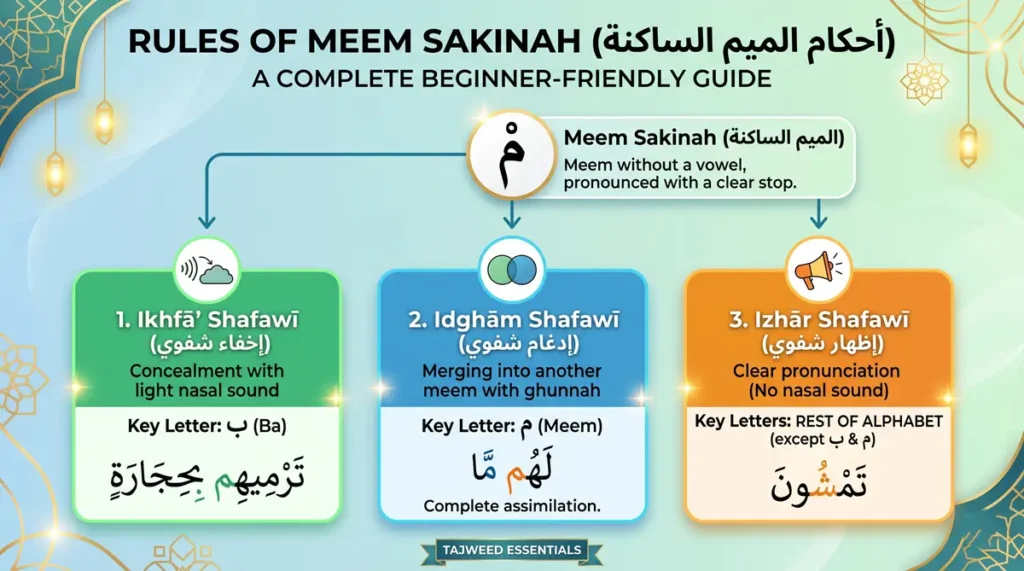
Rules of Meem Sakinah (أحكام الميم الساكنة): A Complete Beginner-Friendly Guide
Rules of Meem Sakinah (أحكام الميم الساكنة): A Complete Beginner-Friendly Guide Meem Sakinah (الميم الساكنة) refers to the Arabic letter م (meem) that...
The Rules of Ikhfa and Iqlab of Noon Sakinah and Tanween in Tajweed
The Rules of Ikhfa and Iqlab of Noon Sakinah and Tanween in Tajweed – Beginner’s Guide The Qur’an is the final revelation from Allah ﷻ to...

If you have any questions

Don’t hesitate to reach out to us via live chat or email!