
If you have any questions
Don’t hesitate to reach out to us via live chat or email!
My dear brothers and sisters in Islam, peace and blessings be upon you all. If you’re reading this, you’re likely a Muslim navigating life in the Western world where the call to prayer isn’t echoing from minarets, and finding time for Islamic learning is a challenge. As a devoted Muslim with a deep love for the Quran and its sciences, We’ve dedicated ourself in Ayat academy to share authentic, straightforward knowledge that resonates with our unique challenges. This series on simplifying Tajweed rules is crafted especially for you: no jargon overload, just practical insights grounded in the Quran, Sunnah, and the wisdom of our righteous predecessors.
In this article, we’re laying the groundwork. We’ll unpack the profound importance of Tajweed, why accurate recitation of the Quran is non-negotiable, the nuances between theoretical and practical Tajweed, whether slip-ups in reading count as sins, popular curricula that have stood the test of time, and the boundless virtues that come from reciting the Quran with excellence. My goal? To ignite that spark in your heart, encouraging you to embrace Tajweed not as a chore, but as a joyful path to closeness with Allah. After all, as the Prophet Muhammad (peace be upon him) taught us, the Quran is a light that guides, heals, and elevates. Remember, dear reader, Allah doesn’t demand flawlessness; He cherishes your sincere striving. Let’s dive in, step by step, and uncover the treasures of proper Quran recitation.
In This Article
ToggleLet’s start at the core: What exactly is Tajweed, and why should it matter to you?
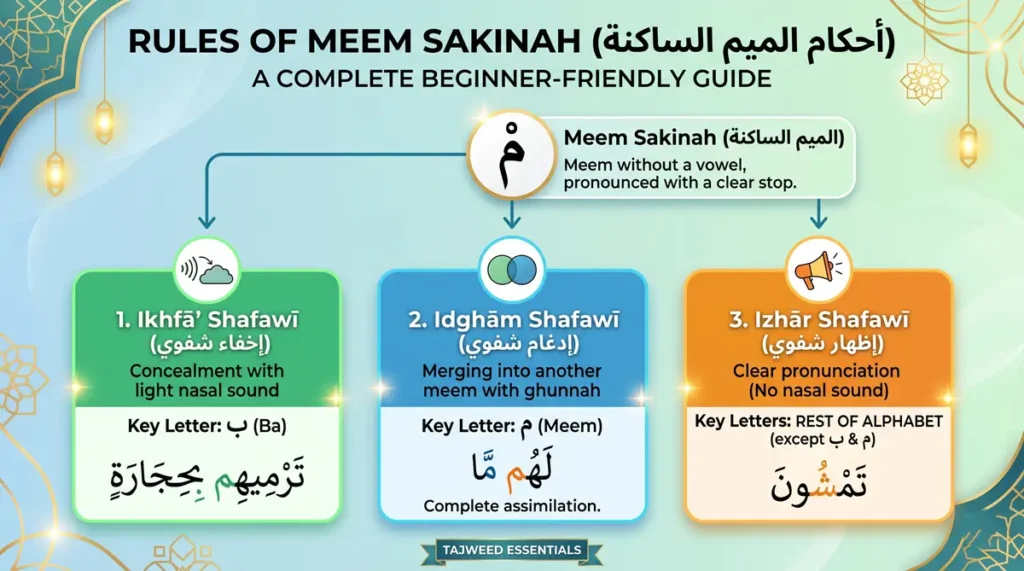
The term “Tajweed” springs from the Arabic root “jawwada,” which carries the meaning of enhancing or perfecting something. In the context of the Quran, Tajweed is the art and science of reciting Allah’s words with utmost accuracy, melody, and reverence. It encompasses rules for articulating each letter from its proper point of origin (makharij al-huruf), applying characteristics like emphasis or softness (sifat al-huruf), and handling phonetic phenomena such as merging (idgham), hiding (ikhfa), or clear pronunciation (izhar).
For many Muslims in the West, Tajweed might seem like an advanced skill reserved for huffaz or imams. But think about it, Arabic isn’t the mother tongue for most of us. We might have learned basic recitation as kids in Sunday school or through family elders, but as adults, life’s demands—commuting to work, managing households in secular societies, or even dealing with cultural assimilation can make our pronunciation rusty. I’ve heard stories from reverts who convert with hearts full of enthusiasm, only to feel discouraged by the complexity of Arabic sounds. Yet, here’s the beauty: Tajweed is for everyone. It’s not about being a professional qari; it’s about honoring the revelation as it was delivered to our beloved Prophet (peace be upon him) through Angel Jibreel.
The Quran itself commands us to prioritize this. In Surah Al-Muzzammil, verse 4, Allah instructs: “And recite the Quran with measured recitation (tartil).” Renowned scholars, such as the great mujtahid Ibn al-Jazari (rahimahullah), interpret “tartil” as reciting with Tajweed slowly, deliberately, and correctly. Without these rules, we might unintentionally warp the sacred text. Picture this analogy: If you received a handwritten poem from a loved one, wouldn’t you read it with care to grasp every nuance? Mispronouncing could change “love” to “loathe.” Similarly, in the Quran, a slight error might shift divine intent, leading to confusion.
But Tajweed offers more than just prevention of errors, it’s a spiritual enhancer. When you apply its rules, the Quran’s inherent musicality emerges, stirring emotions and fostering reflection. It’s akin to how a well-composed Islamic nasheed can bring tears to your eyes or peace to your soul. Proper Tajweed safeguards your tongue from slips, upholds the Quran’s purity, and transforms recitation into an act of profound ibadah.
Now, let’s make this relatable for our Western context. Imagine leading salat al-jumu’ah in a small community center or teaching your children Surah Al-Fatihah at bedtime. Solid Tajweed boosts your self-assurance and ensures you’re passing on authentic knowledge. In an era of social media dawah, where a quick Instagram reel can reach thousands, knowing Tajweed means you’re sharing verses without distortion. And amidst distractions endless streaming services, social scrolls, or work emails carving out time for Tajweed becomes a subtle form of striving (jihad an-nafs) against spiritual neglect.
Authentic hadiths reinforce this urgency of learning Tajweed. The Messenger of Allah (peace be upon him) stated: “The one who recites the Quran skillfully will be in the company of the noble and obedient angels, and as for the one who recites the Quran with difficulty, stammering over it, he will have twice that reward.” (Reported in Sahih al-Bukhari and Sahih Muslim). This hadith is a mercy for beginners: Your struggles aren’t in vain; they amplify your ajr.
The phrase “al-safarah al-kiram al-bararah” refers to the honorable, righteous scribes among the angels — the very same ones Allah mentions in Surah ‘Abasa (80:15-16):
“In the hands of safarah (noble and obedient messengers / scribes), who are kiram bararah (honorable and obedient).”
These are the angels who carry the revelation (like Jibril عليه السلام), record the deeds of humanity, and are closest to Allah in purity and obedience. The proficient reciter — the one who has mastered the recitation, recites with precision (tajwid), beauty, and correct pronunciation, and ideally combines it with understanding and acting upon it — is raised to their rank and companionship in the Hereafter. What an honor! To be gathered with those pure, sinless beings who never disobey Allah.
The second part addresses the person who finds recitation difficult — perhaps due to a non-Arab tongue, weak memorization, speech challenges, newness to tajwid rules, or any other genuine hardship. The words used describe someone who “yata‘ta‘u” (stammers, stutters, hesitates, repeats) because the Quran feels heavy and burdensome on their tongue, yet they persist and keep trying.
For this sincere effort, Allah grants two rewards (ajran):
Scholars like Imam al-Nawawi (in Sharh Sahih Muslim) explain clearly: this double reward comes from the recitation + the hardship and striving. It does not mean the struggler surpasses the proficient reciter in overall virtue. The proficient one receives the loftier station — companionship with the elite angels — which is far greater. The double portion here highlights Allah’s immense generosity toward those who push through barriers to connect with His words.
Moreover, Tajweed fosters unity in the global ummah. Whether you’re in a mosque in Berlin or a home in Los Angeles, reciting with the same precision as Muslims in Makkah creates a bond transcending borders. It’s a bulwark against the cultural erosion many face in the West, where Islamic practices can feel sidelined. By learning Tajweed, you’re reclaiming your heritage and strengthening your identity as a Muslim.
To deepen this, consider historical context. The Prophet (peace be upon him) himself recited with Tajweed, as evidenced by companions like Umm Salama (may Allah be pleased with her), who described his recitation as clear and measured. Early scholars compiled these rules to preserve the Quran’s oral tradition, especially after the expansion of Islam to non-Arab lands. Today, in our diverse Western societies, Tajweed bridges that gap, making the Quran accessible yet authentic.
Shifting gears, let’s emphasize why accuracy in Quran reading is paramount.It’s not merely recommended; it’s divinely mandated. The Quran is Kalam Allah, the eternal speech of God, revealed progressively over 23 years to Prophet Muhammad (peace be upon him) as a mercy for all worlds. Any deviation in reading risks tampering with this miracle, potentially leading to misinterpretations or bid’ah (innovations) in belief and practice.
Arabic’s precision amplifies this need. Unlike English, where accents vary without altering meaning much, Arabic demands exactness. For instance, confusing “qalb” (heart) with “kalb” (dog) or “sirat” (path) with “sirrat” could distort verses. In Surah Al-Fatihah, saying “ihdina as-sirat al-mustaqim” incorrectly might subtly change the plea for guidance. Such errors, if habitual, could mislead not just the reciter but listeners too.
This accuracy is tied to preservation. The Quran was committed to memory and script during the Prophet’s lifetime, transmitted via tawatur—unbroken chains of mass narration. Accurate recitation maintains this chain. As the Prophet (peace be upon him) declared: “The best of you are those who learn the Quran and teach it to others.” (Sahih al-Bukhari). Teaching implies accuracy, ensuring the ummah inherits the Quran pristine.
For Muslims in the West, this combats prevalent misinformation. In multicultural settings, we’re often questioned about Islam— “What does this verse really mean?” Accurate recitation, paired with understanding, empowers effective dawah. It also instills inner peace. Allah assures in Surah Ar-Ra’d (13:28): “Verily, in the remembrance of Allah do hearts find rest.” Precise reading makes this remembrance more potent.
Conversely, inaccurate reading breeds disconnection. Reciting mechanically, without proper sounds, turns a spiritual exercise into a rote task, devoid of khushu’ (humility). But with accuracy, each ayah resonates, prompting contemplation and action. Scholars like Ibn al-Qayyim al-Jawziyyah (rahimahullah) in his work “Al-Fawa’id” highlight how proper recitation sharpens comprehension, enabling better adherence to commands like charity or patience.
In our fast-paced Western lives, practicality is key. Begin with essentials: Master short surahs like Al-Kawthar or Al-Asr. Leverage free apps such as Muslim Pro or Quran Majeed for audio guides. Join virtual classes via Zoom—many are timed for after-work hours. The Prophet (peace be upon him) advocated gradual learning: “Recite the Quran in a slow, measured tone.” (Reported in Sunan Abi Dawud).

Expand on benefits: Accurate reading enhances memorization (hifz), as correct pronunciation aids retention. It also enriches taraweeh in Ramadan, making long nights spiritually fulfilling. For parents, it’s a legacy—teaching kids accurately plants seeds of love for the Quran. In professional spheres, like Muslim chaplains or educators, it’s a professional edge.
Historically, accuracy prevented schisms. During Caliph Uthman’s era (may Allah be pleased with him), standardizing the mushaf ensured uniform recitation. Today, in the West, where dialects mix, Tajweed upholds that unity.
Tajweed isn’t monolithic; it splits into theoretical and practical dimensions, each complementing the other like theory and practice in any skill.
Theoretical Tajweed is the intellectual backbone, studying rules abstractly. It covers makharij al-huruf (e.g., throat letters like ‘ayn), sifat (permanent traits like isti’la for elevation), and tajweed ahkam (rules for noon saakin, like idgham with ghunnah). You’d analyze why “min rabbihim” requires ikhfa, or count madd tabee’i as two harakat.
This theory, immortalized in works like Ibn al-Jazari’s “Al-Muqaddimah fi ma Yajib ‘ala Qari’ al-Quran an Ya’lamuhu,” builds expertise. It’s crucial for scholars and teachers, ensuring consistent transmission.
Practical Tajweed brings theory alive in recitation. It’s hands-on: Pronouncing verses with flow, observing waqf (stops), and modulating voice for emphasis. Here, you recite Surah Al-Baqarah, applying rules in context.
The distinction? Theory is conceptual; practice is experiential. Both are vital. Scholars deem theoretical Tajweed fard kifayah (collective duty) to safeguard knowledge, while practical is fard ‘ayn (personal duty) for all reciters, per fatwas from bodies like Dar al-Ifta al-Misriyyah.
For Western Muslims, blend them wisely. Start theoretically with English books like “Tajweed Rules ” by Sister Maha rashed. Then practice via teachers on platforms like Preply. Apps like Tajweed Quran provide interactive drills.
Tips abound: Mirror renowned reciters like Sheikh Husary or Maher Menshawy. Self-record using your phone, critique against rules. Group sessions via Discord or local masjids reinforce learning. Over months, theory refines practice, yielding effortless, beautiful tilawah.
Common pitfalls: Over-focusing theory leads to paralysis; pure practice risks errors. Balance yields mastery.
A frequent concern: “If I mess up while reading, am I sinning?” Let’s clarify with nuance.
In Sunni jurisprudence, errors fall into lahn jali (gross, meaning-altering) and lahn khafi (subtle, aesthetic). Lahn jali, like swapping letters in “rabbil ‘alamin” to change meaning, is sinful if intentional. But unintentional? If you did your best to learn tajwīd but still made some mistakes, inshAllah you will be forgiven. The Prophet ﷺ said:
“My ummah has been excused for mistakes, forgetfulness, and what they are forced to do.”
(Sunan Ibn Mājah, graded ḥasan). However, if you did not make sufficient effort to learn when you were able to do so, then it may be sinful.
Fatwas affirm: Deliberate major errors are haram. Yet, earnest efforts reward, even with flaws.
Lahn khafi, like shortchanging a madd, isn’t sinful but diminishes quality. Advanced learners should perfect it; novices are excused.
In Western contexts, where Arabic fluency varies, don’t paralyze yourself. Recite known parts accurately, expand gradually.
Tajweed learning follows proven frameworks. Here’s an expanded list:
Begin basic, advance to ijazah. Communities help sustain motivation.
Proper recitation unlocks virtues galore. The Prophet (peace be upon him) urged: “Recite the Quran, for it intercedes on Judgment Day.” (Sahih Muslim).
It purifies: Like polishing a mirror, removing sin’s tarnish. Hadith: Quran reciter like fragrant fruit. (Sahih al-Bukhari).
Letter-by-letter rewards: Ten hasanat per harf. (Jami’ at-Tirmidhi).
Tranquility: Eases Western stresses.
Intercession: Quran advocates for you.
Double ajr for efforts.
Protection: From jinn, as in Ayat al-Kursi.
Guidance: Better understanding leads to action.
Communal blessings: Group recitals draw angels. (Sahih Muslim).
In the West, it builds resilience against fitnah.
More: Elevates status in akhirah, as “Proficient reciters with angels.” Heals illnesses, per hadiths on ruqyah.
Family bonds: Shared recitation strengthens homes.
As we conclude this reflection on the beauty of Quran recitation through Tajweed, it is important to pause and recognize the depth of what this sacred science offers. Tajweed is not merely a set of pronunciation rules; it is a divinely guided art that perfects our connection to the words of Allah. For Muslims living in the West, where Islamic environments are often limited and distractions are many, Tajweed serves as a powerful means of preserving accuracy, cultivating spiritual tranquility, and strengthening unity within the global Muslim ummah.
Throughout this exploration, we have seen how the Prophet ﷺ honored both the skilled reciter, who is raised to the companionship of the noble angels, and the striving learner, who earns double the reward for perseverance. This balance reflects Allah’s mercy and reminds us that sincerity and effort matter more than perfection. We clarified the difference between theoretical and practical Tajweed, addressed common concerns about mistakes in Quran recitation, highlighted trusted learning paths such as Ibn al-Jazari’s Al-Muqaddimah and the Noorani Qa‘idah, and reflected on the immense virtues of proper recitation—from letter-by-letter rewards to intercession on the Day of Judgment.
Yet, learning Tajweed should not stop at understanding—it must lead to action. Whether you are a new Muslim in New York, a working parent in London, or a student in Toronto seeking authentic Islamic knowledge, the path forward is simple and achievable. Begin today by picking up the mushaf, listening to a reliable qari such as Sheikh Abdul Basit, and applying just one Tajweed rule, even if it is the correct makhraj of a single letter. Consider enrolling in an online Tajweed course designed for Western schedules, or join a local or virtual Quran study group to practice consistently.
Tajweed is not a barrier reserved for scholars, it is a bridge to preserving the Quran, strengthening Muslim identity, and drawing closer to Allah in every place and time. With patience and consistency, this journey will illuminate your heart, elevate your akhirah, and allow you to pass the Quran on pure and beautiful to future generations.
diverse ummah, Tajweed isn’t a barrier; it’s a bridge that preserves the Quran’s purity, strengthens our identity against cultural dilution, and draws us closer to the Prophet’s (peace be upon him) Sunnah. As Allah promises in Surah Al-Ankabut (29:69): “And those who strive for Us We will surely guide them to Our ways.” Your striving in Tajweed could be the key to that guidance, healing your heart, elevating your akhirah, and inspiring generations.
May Allah make us all among those who recite His Book with excellence, forgive our shortcomings, and grant us the companionship of the righteous in Jannah. Ameen. If this article has ignited a flame in you, share it with a fellow Muslim—let’s spread the light of proper Quran recitation far and wide. For more insights on Tajweed rules simplified, Quran memorization tips, or Islamic living in the West, stay tuned to Ayat Academy.
Ayat Academy is a leading Islamic Academy mainly managed from Egypt
It’s aim is to help Muslims of all ages and parents to keep their kids in a unique suitable Islamic environment to learn not only the Arabic and Quran recitation but also to understand and implement these great noble ethics or Islamic morals taught by the Quran and the Sunnah of the prophet Muhammad (Peace be upon him).
At Ayat Academy, we believe in the transformative power of knowledge and strive to create an inclusive community where individuals, regardless of their linguistic background, can embark on a journey of spiritual and intellectual enrichment.
If you have any questions
Don’t hesitate to reach out to us via live chat or email!