Ayat Academy

Do angels exist in Islam?

Do angels exist in Islam

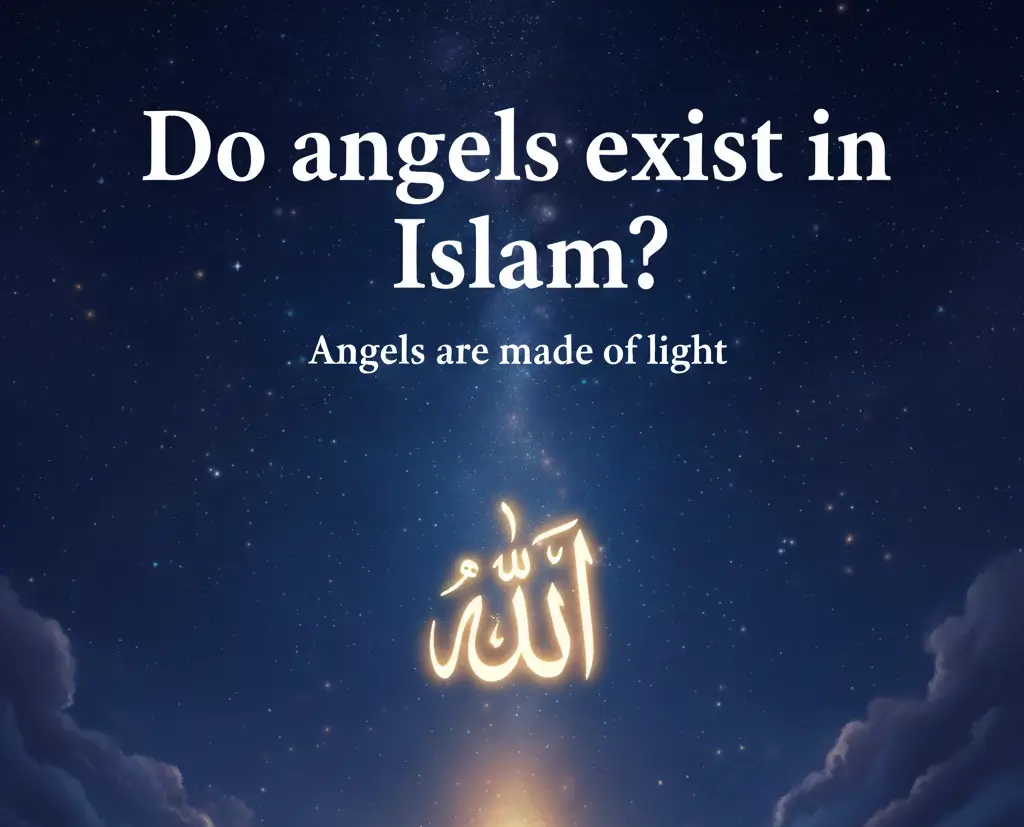
One of the fundamental tenets of Islam is the notion that angels exist. Muslims think that God made angels out of light. God’s laws are obeyed by angels in the natural world and the cosmos. The presence of angels behind them, acting under God’s direction, causes what we typically refer to as the “forces of nature” to come into action.

The term “alam al-ghayb” refers to a level of existence above the world of phenomena that can be perceived. Humans cannot imagine beings outside of the physical world of mundane reality because we are God’s creatures living there. Muslims believe that angels exist because God mentions them in His revelations. Angels are typically invisible, but if necessary, they can take on forms that are appropriate for the visible world and appear to the unaided eye.

What is an angel?

Malak (plural: mala’ikah) is the Arabic word for an angel, and its root word means “messenger.” Muslims hold that God revealed the Qur’an to Prophet Muhammad (peace be upon him) through the angel Gabriel, also known as Jibreel. He appeared to the Prophet as a talking individual, which was appropriate given his position. The Prophet’s guide on the Night of Ascension or Al-Mi’raj was the same Angel Jibreel. However, it is essential to note that in Islam, angels are not regarded as intermediaries between God and humans because humans cannot reach God except through the angels. God may send His revelation through the angel Gabriel.

Functions of angels

The Qur’an also mentions the importance of angels in processes like creation, prophecy, spiritual life, death, and the functioning of the elements of nature. For instance, an angel who brings thunder also serves God and complies with His orders. Other angels are in charge of womb-bound embryos or are in charge of guarding people. These verses from the Qur’an discuss the angel of death’s role:

[The angel of death, who has been charged with you, will gather you; then to your Lord you will be returned.] (As-Sajdah 32:11) 

Additionally, the Qur’an refers to angels in relation to Heaven and Hell:

 [Gardens of Eden which they shall enter … and the angels shall enter unto them from every gate.] (Ar-Ra`d 13:23) 

While people are still on earth, angels as well continue to record their actions:

 [There are over you watchers, noble writers, who know whatever you do.] (Al-Infitar 82:10-12) [Over every soul there is a watcher.] (At-Tariq 86:4)

Numerous hadiths also refer to angels. For instance, it is said that the Prophet Muhammad (peace be upon him) said that when people come together to remember God,  “The angels surround them, mercy covers them, peace descends on them, and God remembers them among those who are with Him” (At-Tirmidhi).

The absence of an independent will makes angels distinct from humans. They were made with the express intent of serving God and obeying His commands. Some angels constantly worship God, bowing to Him and never raising their heads.

Characteristics of Angels

We can sum up the qualities of angels by considering the statements made about them in the Qur’an and reliable Hadith as follows:

  1. Angels are luminous, heavenly beings made of light. By this, they are not tangible creatures that humans can see, hear, or touch using their regular senses and perceptions. The Prophet (PBUH) is reported to have said in this regard, “Angels are created from light and jinn from fire, whereas Adam is created out of what is described to you [i.e. of clay as in the Qur’an].” The Qur’an only refers to angels as beings with wings and says nothing about where they came from:

“Praise be to God, The Originator of the heavens and the earth, The Maker of the angels (as) messengers endowed with wings, two’s, three’s and four’s. He increases in creation as He decides; surely God is Ever-Determiner over everything.” (Qur’an, 35:1)

According to a reliable narration in al-Bukhari “Gabriel is endowed with six hundred wings; each wing is as great in scope as the horizon.”

Three names of angels are also mentioned in the Qur’an: Gabriel, Michael, and Malik the Keeper of Hellfire. Other angels with specific roles are also mentioned, including “the angel of death,” “the honorable writing angels,” and “the purely honorable and benign angels,” as well as “the guardian” and “the constantly ready angel.”

  1. Angels are perfectly capable of appearing and assuming physical forms, such as the human shape, for example, even though they are immaterial and invisible. When Gabriel visited the Prophet Muhammad (peace be upon him), he often took on a human form. When he appeared to Mary (peace be upon her), he appeared human, as did the angels who went to see Prophet Abraham (PBUH).
  2. Angels serve the Lord with honor.

“They do not disobey God in whatever He commands them and they perform whatever they are commanded to do.” (Qur’an, 66: 6)

In other words, because all of the angels’ wills, intentions, actions, and movements are focused on carrying out the commands they receive from God, they never disobey the divine laws.

  1. They differ from humans and jinn in that they possess the following qualities: They do not eat or drink.
  1. They don’t get married or have kids.
  2. They do not identify as either men or women.

Latest Articles

Heavy and Light Letters in Arabic (Tafkhīm and Tarqīq): A Complete Beginner-to-Advanced Guide
Heavy and Light Letters in Arabic (Tafkhīm and Tarqīq): A Complete Beginner-to-Advanced Guide Introduction: Why Heavy and Light Letters Matter When a...
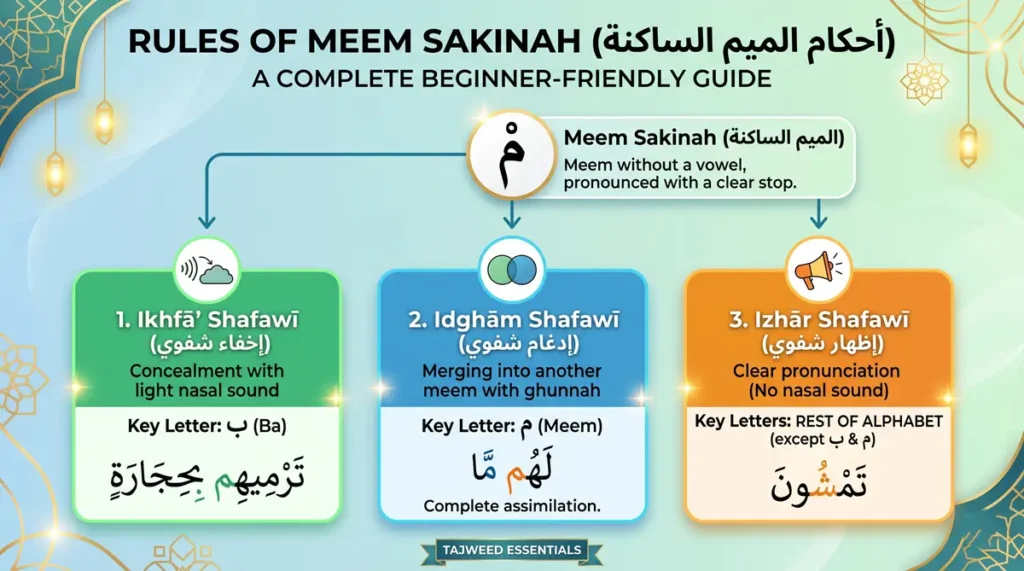
Rules of Meem Sakinah (أحكام الميم الساكنة): A Complete Beginner-Friendly Guide
Rules of Meem Sakinah (أحكام الميم الساكنة): A Complete Beginner-Friendly Guide Meem Sakinah (الميم الساكنة) refers to the Arabic letter م (meem) that...
The Rules of Ikhfa and Iqlab of Noon Sakinah and Tanween in Tajweed
The Rules of Ikhfa and Iqlab of Noon Sakinah and Tanween in Tajweed – Beginner’s Guide The Qur’an is the final revelation from Allah ﷻ to...

If you have any questions

Don’t hesitate to reach out to us via live chat or email!