Ayat Academy

Ethics of Islam: An Insight into the Moral Teachings of the Islamic Faith

Ethics of Islam

Islam is one of the largest religions in the world with over 1.8 billion followers worldwide. It is a monotheistic religion that believes in worshipping one God, Allah, and the teachings of the Prophet Muhammad. Islam’s ethical values and principles have been preserved for over fourteen centuries and are considered among the most comprehensive ethical systems in the world. Ethics of Islam emphasize the moral teachings of the Islamic faith, which form the foundation of the Islamic way of life.

Islamic ethics is a broad topic that covers many aspects of human behavior, including personal and social ethics, economic ethics, environmental ethics, and political ethics. The ethical teachings of Islam provide a framework for Muslims to lead a virtuous and fulfilling life while promoting the greater good for all humanity.

In this article, we will explore the ethics of Islam and examine its teachings on morality, justice, compassion, and responsibility. We will also highlight some of the fundamental ethical values and principles that guide Muslim conduct and behavior.

The Concept of Ethics in Islam

The term ethics in Islam is known as ‘akhlaq,’ which means character or behavior. Islamic ethics is based on the belief that morality and ethical values come from Allah’s divine guidance, as revealed in the Quran and the teachings of the Prophet Muhammad. Islamic ethics emphasizes the importance of human conduct and behavior, and it guides how Muslims should live their lives in a manner that is pleasing to Allah.

The Importance of Morality in Islam

Islam places great emphasis on morality, which is considered to be the cornerstone of the Islamic faith. Morality is defined as the standard of right and wrong behavior, and Muslims need to maintain high moral standards in all aspects of their lives. Muslims are encouraged to cultivate virtues such as honesty, kindness, generosity, compassion, and humility, considered the hallmarks of a morally upright person.

Justice in Islam

Justice is a fundamental ethical value in Islam and is considered one of the Quran’s central themes. Islamic teachings emphasize the importance of fairness and equity in all aspects of life, including social, economic, and political spheres. Muslims are instructed to be fair in their dealings with others, regardless of race, religion, or social status.

Compassion in Islam

Compassion is another crucial ethical value in Islam and is the foundation of Islamic morality. Compassion is the ability to empathize with others and show kindness and mercy towards them. Muslims are encouraged to be compassionate towards all living beings, including animals and the environment. Compassion is considered a vital characteristic of a true believer in Islam.

Responsibility in Islam

Responsibility is an essential ethical value in Islam and is closely linked to accountability. Muslims are taught to take responsibility for their actions and be accountable for their decisions’ consequences. Responsibility is emphasized in all aspects of life, including personal, social, economic, and political spheres. Muslims are encouraged to be responsible citizens and to contribute positively to society.

Conclusion:

Islamic ethics is a comprehensive system of moral teachings that emphasizes the importance of human conduct and behavior. Islam’s ethical values and principles provide a framework for Muslims to lead a virtuous and fulfilling life while promoting the greater good for all humanity. The teachings of Islam on morality, justice, compassion, and responsibility guide how Muslims should live their lives in a manner that is pleasing to Allah.

In conclusion, the ethics of Islam are based on the principles of justice, compassion, responsibility, and morality, and these values serve as a guide for Muslims to live their lives with integrity and to contribute positively to society. The Islamic ethical system is not only applicable to personal behavior, but it also extends to economic, social, and political spheres, emphasizing the importance of fairness, equity, and compassion in all areas of life.

Islamic ethics is not limited to the Muslim community; it also promotes interfaith and intercultural harmony, respect for human dignity, and the protection of the environment. Islamic ethical values and principles provide a universal framework for all humanity to lead a righteous and fulfilling life.

In today’s world, where moral decay and ethical erosion are prevalent, the ethical teachings of Islam can provide a much-needed remedy to promote social harmony and to address the pressing issues of our time, such as poverty, inequality, and environmental degradation.

In conclusion, the ethics of Islam provide a comprehensive framework for Muslims to lead a virtuous and fulfilling life while promoting the greater good for all humanity. The values and principles of Islam emphasize the importance of morality, justice, compassion, and responsibility, which serve as a guide for Muslims to live their lives with integrity and to contribute positively to society. The ethical teachings of Islam are universal, promoting interfaith and intercultural harmony, respect for human dignity, and the protection of the environment. It is up to Muslims to practice and promote these values, which can serve as a beacon of hope in a world that is in dire need of ethical guidance.

Latest Articles

Heavy and Light Letters in Arabic (Tafkhīm and Tarqīq): A Complete Beginner-to-Advanced Guide
Heavy and Light Letters in Arabic (Tafkhīm and Tarqīq): A Complete Beginner-to-Advanced Guide Introduction: Why Heavy and Light Letters Matter When a...
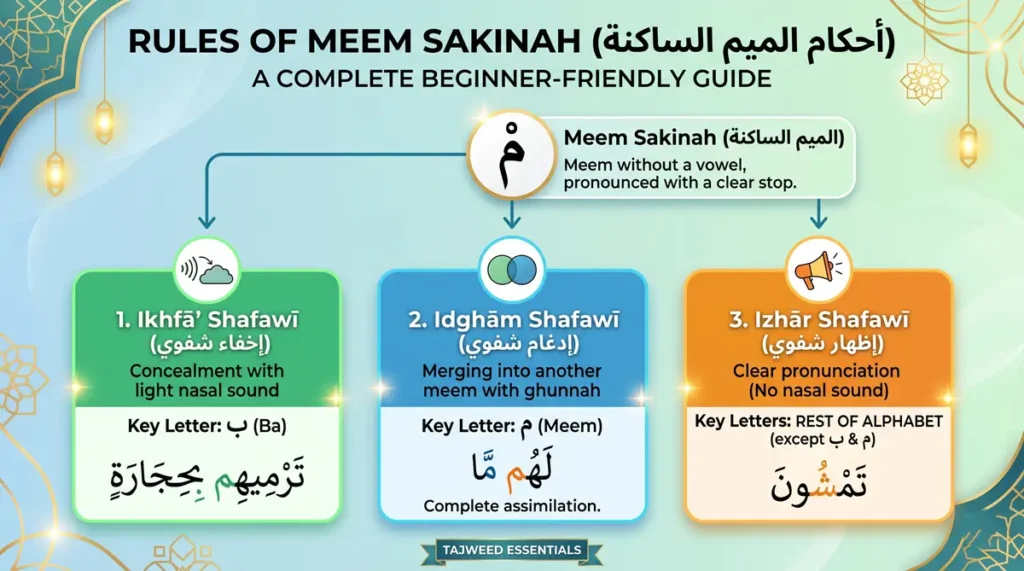
Rules of Meem Sakinah (أحكام الميم الساكنة): A Complete Beginner-Friendly Guide
Rules of Meem Sakinah (أحكام الميم الساكنة): A Complete Beginner-Friendly Guide Meem Sakinah (الميم الساكنة) refers to the Arabic letter م (meem) that...
The Rules of Ikhfa and Iqlab of Noon Sakinah and Tanween in Tajweed
The Rules of Ikhfa and Iqlab of Noon Sakinah and Tanween in Tajweed – Beginner’s Guide The Qur’an is the final revelation from Allah ﷻ to...

If you have any questions

Don’t hesitate to reach out to us via live chat or email!