Tajweed is the essential discipline of reciting the Quran with precision, focusing on correct pronunciation, melodic tone, and rhythmic accuracy. Mastering this art requires a deep understanding of specific phonetic rules and articulation points.
The time required to attain proficiency varies, influenced by a student’s natural aptitude, consistency, and the instructional method used. This article examines the average timeframe for learning Tajweed and the critical factors that shape the educational journey.
Tajweed is an Arabic word that means “doing something well.” In the context of Quran recitation, it refers to the rules and guidelines for proper pronunciation, intonation, and emphasis. Tajweed is essential for correctly understanding and appreciating the Quran, as it enhances the beauty and clarity of the recitation. Learning tajweed involves studying pronunciation rules and applying them to Quranic verses.
2. Factors Affecting the Learning Process
Several factors affect the time it takes to master tajweed. Natural ability plays a significant role, as some students may have an innate talent for recitation, making it easier for them to learn tajweed quickly. Additionally, dedication and the method of instruction can affect the learning process. Students who are dedicated to regular practice and study will generally learn faster than those who are not. The method of instruction is also critical, as some students may learn better through in-person classes with a teacher, while others may prefer online courses or self-study.
3. Timeframe for Learning Tajweed
On average, it takes around six months to a year to learn tajweed. However, this timeframe is flexible, as some students may take longer or shorter. The key to mastering tajweed is consistency in practice and dedication to learning. Students should focus on mastering each rule before moving on to the next and not rush their knowledge.
4. Tips for Learning Tajweed
To learn tajweed effectively, students should follow these tips:
Consistency: Regular practice and study are crucial for mastering tajweed. Students should set a study schedule that works for them and stick to it. here are some tips to apply consistency.
Set a study schedule: students should set a study schedule that works for them and stick to it. For example, students can schedule an hour of practice each day or a few hours per week. Students can also divide their study time into smaller chunks of 10-15 minutes and practice daily. This will help ensure that they regularly practice and apply tajweed rules.
Create a conducive learning environment: students should create a conducive learning environment without distractions. Students should choose a quiet and comfortable place to practice where students can focus on their studies.
Use learning materials consistently: students should use consistent learning materials to practice tajweed. Students can choose a reliable textbook or online course and use it consistently throughout their studies. This will help students avoid confusion and ensure they practice the correct tajweed rules.
Find a study partner: students can find a study partner or a Quran recitation friend who is also learning tajweed. Students can practice together, share feedback, and encourage each other to stay consistent in their studies.
Track progress: you should track your progress in learning tajweed. Students can keep a journal or use an app to record their practice time, the rules they have mastered, and the areas they need to improve. This will help them stay motivated and track their progress over time.
By applying consistency in your studies, students can improve their tajweed skills and deepen their understanding of the Quran.
Patience: Tajweed is a gradual process, and students should be patients with themselves and focus on progress rather than perfection.
Guidance: Seeking guidance from a qualified teacher or mentor is essential to ensure students learn tajweed correctly.
Practice: Regularly practicing reciting Quranic verses is the best way to apply tajweed rules and improve skills. Here are some tips to practice regularly.
Set aside regular practice time: Students should set aside a regular time for practice each day or week. For example, they can practice for 30 minutes every day or two hours per week. Consistency is critical, so students should choose a practice schedule to stick to.
Focus on one rule at a time: Tajweed rules can be complex and challenging to master. Therefore, students should focus on one rule at a time and practice it until they feel comfortable before moving on to the next one. They can use practice materials, such as online courses, textbooks, or audio recordings, to help them practice specific rules.
Practice with a teacher or mentor: Working with a qualified teacher or mentor is an excellent way to practice tajweed regularly. Students can get feedback on their recitation and guidance on improving their skills. They can also ask questions and get clarification on any confusing rules.
Use repetition: Repetition is an effective way to practice tajweed. Students should recite Quranic verses repeatedly, focusing on one rule at a time. This will help them internalize the rule and apply it consistently.
Practice with others: Students can practice tajweed with others, such as friends or family members. They can take turns reciting Quranic verses and giving each other feedback. This can be a fun and interactive way to practice tajweed regularly.
Use technology: Many tajweed apps and online resources are available that students can use to practice regularly. They can listen to recitations, practice exercises, and take quizzes to test their skills. These resources can help make tajweed practice more convenient and accessible.
Feedback: Seeking feedback from others, such as a teacher or fellow student, can help identify areas for improvement and enhance tajweed skills.
Conclusion:
In conclusion, learning tajweed is an essential aspect of Islamic education that requires dedication and regular practice. The time it takes to master tajweed varies depending on factors such as natural ability, dedication, and the method of instruction. On average, it takes around six months to a year to learn tajweed, but some students may take longer or shorter. By following the tips outlined in this article, students can improve their tajweed skills and deepen their appreciation of the beauty and meaning of the Quran.
Heavy and Light Letters in Arabic (Tafkhīm and Tarqīq): A Complete Beginner-to-Advanced Guide Introduction: Why Heavy and Light Letters Matter When a...
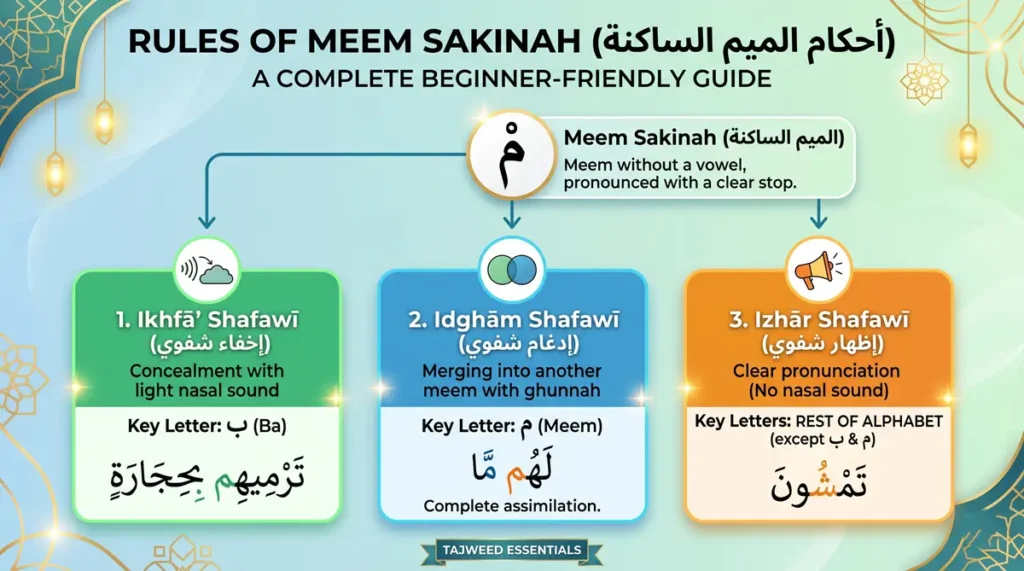
Rules of Meem Sakinah (أحكام الميم الساكنة): A Complete Beginner-Friendly Guide Meem Sakinah (الميم الساكنة) refers to the Arabic letter م (meem) that...